

An OSHA respiratory protection program Florida small business must include a written worksite specific plan that covers respirator selection, medical evaluations, and annual fit testing. Employers are required to provide all necessary equipment and training at no cost while ensuring a designated administrator manages the program to maintain 1910.134 compliance. These steps protect workers from hazardous atmospheres and help companies avoid common OSHA citations and penalties.
Small business owners in Florida often find themselves caught between the demands of daily operations and the technical complexities of OSHA 1910.134 compliance. Navigating federal respiratory protection standards is rarely straightforward; a single oversight in fit testing or documentation can lead to significant penalties and safety risks. For employers in regions like Melbourne, these challenges are compounded by specific climate considerations that affect respirator comfort and efficacy. This guide provides a definitive roadmap for achieving and maintaining compliance through 2026. You will learn the eight essential elements of a written program, the nuances of medical evaluations, and critical updates regarding voluntary respirator use. By the end of this article, you will have the practical knowledge required to select a program administrator and ensure your team remains protected and your business remains audit ready.
Understanding OSHA 1910.134 for Florida Employers
Respiratory protection consistently ranks as one of the top ten most frequently cited OSHA violations in Florida. For businesses in Melbourne and throughout the Space Coast, understanding the scope of 29 CFR 1910.134 is the first step in avoiding significant financial penalties. OSHA defines the scope of this standard broadly; it applies whenever a respirator is necessary to protect employee health from harmful dusts, fogs, fumes, mists, gases, or vapors.
A common misconception among local firms is that small business status or the use of simple equipment, such as an N95 filtering facepiece, provides an exemption from formal documentation. In reality, if an employer requires a worker to wear any type of respirator, a written, site specific program is mandatory. Failing to implement this can lead to serious citations, which currently carry a maximum penalty of $16,550 per violation. For a Florida small business, these costs can easily escalate if multiple deficiencies are found during OSHA compliance audits. Establishing a compliant OSHA respiratory protection program Florida small business owners can rely on requires moving beyond basic mask distribution to a structured framework that includes safety training services and medical oversight. Ensuring your program meets these federal requirements is not just about avoiding fines; it is about protecting your workforce from long term respiratory illness.
Key OSHA Respiratory Protection Proposals and 2026 Updates
Recent regulatory updates reflect OSHA's attempt to streamline compliance while maintaining worker safety. In July 2025, OSHA introduced a significant proposal aimed at reducing the administrative burden on employers. This update specifically targets the medical evaluation requirement for employees using filtering facepiece respirators (FFRs), such as N95 masks, and loose-fitting powered air-purifying respirators (PAPRs). For a company establishing an OSHA respiratory protection program Florida small business owners can manage efficiently, this represents a potential reduction in both logistics and cost.
The proposed amendment recognizes that the physiological strain of wearing a lightweight N95 or a loose-fitting PAPR is significantly lower than that of a tight-fitting elastomeric respirator. By removing the mandatory Physician or Licensed Health Care Professional (PLHCP) evaluation for these specific devices, OSHA estimates a national savings exceeding $600 million. However, it is vital to understand what this proposal does not change. Employers must still facilitate annual fit testing for N95 users and maintain a site-specific written program.
Melbourne businesses should also note that OSHA training and recordkeeping requirements remain fully in effect. Even if medical evaluations are eventually phased out for N95s, you must still document that employees know how to inspect, wear, and dispose of their equipment. Furthermore, if your operations involve tight-fitting respirators or half-face masks, the full medical evaluation process remains mandatory. Staying ahead of these 2026 trends requires a clear distinction between these equipment classes to ensure your program remains compliant without over-spending on unnecessary clinical evaluations.
Eight Essential Elements of a Written Respiratory Protection Program

While the 2026 updates may reduce medical screening costs for certain equipment, the core requirement for a site-specific written program is non-negotiable. To achieve compliance, an OSHA respiratory protection program Florida small business owners implement must address eight specific criteria outlined by 29 CFR 1910.134. These elements provide the framework for OSHA compliance audits and ensure that safety protocols are both repeatable and enforceable.
Melbourne business owners should use the following checklist to evaluate their current documentation against federal standards:
Selection Procedures: Document how you identify and evaluate respiratory hazards, such as particulates in construction or chemical vapors in aerospace manufacturing, to select the correct respirator type and cartridge.
Medical Evaluations: Outline the process for confidential medical screenings performed by a Physician or Licensed Health Care Professional (PLHCP) before an employee is fit tested or required to use the respirator.
Fit Testing Protocols: Define the specific methods used to ensure a tight seal for all required users, including annual retesting and testing when physical changes occur.
Procedures for Proper Use: Establish rules for routine use, emergency situations, and IDLH (Immediately Dangerous to Life or Health) atmospheres. This includes the mandatory requirement for users to be clean-shaven at the seal area.
Maintenance and Care: Provide detailed instructions for cleaning, disinfecting, storing, and inspecting equipment to protect it from damage and contamination.
Atmospheric Air Quality: If your site utilizes supplied-air respirators, you must include procedures to ensure breathing air meets Grade D specifications.
Employee Training: Detail how you will fulfill OSHA training and recordkeeping requirements, focusing on hazard recognition, respirator limitations, and proper donning and doffing techniques.
Program Evaluation: Set a schedule for periodic audits to assess if the program is being implemented correctly and remains effective for your specific workforce.
Failure to include any one of these elements can lead to a program being deemed ineffective during an inspection. Integrating these components into your daily operations through professional safety training services is the most reliable way to maintain a safe and compliant job site.
Respirator Fit Testing and Medical Evaluation Requirements
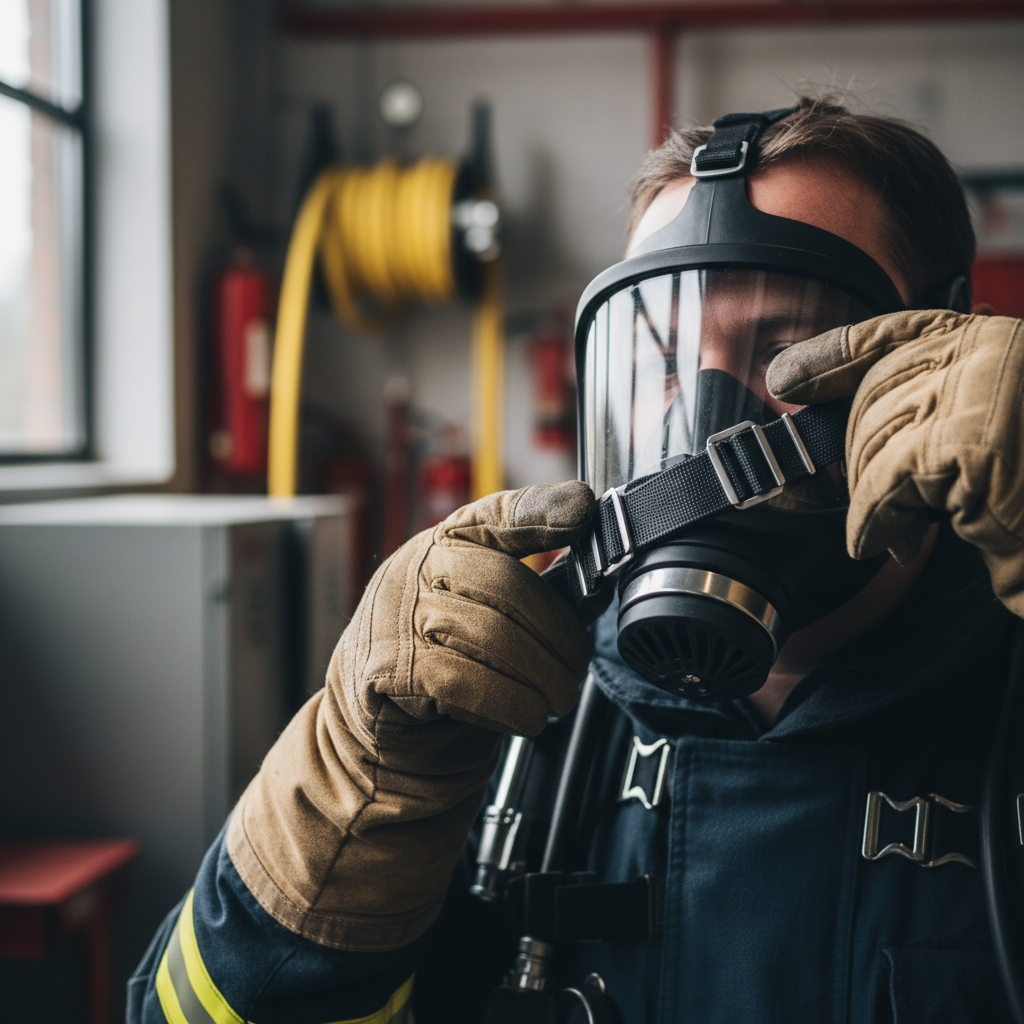
Executing the eight elements requires a strict sequence of operations, starting with medical clearance. OSHA requires that a medical evaluation be completed before an employee undergoes fit testing or is required to wear a respirator on the job. This evaluation determines if a worker’s cardiovascular or respiratory system can handle the physiological burden of respirator use. For an OSHA respiratory protection program Florida small business owners implement, these evaluations must be performed by a Physician or other Licensed Health Care Professional (PLHCP).
The process typically utilizes the OSHA Respirator Medical Evaluation Questionnaire found in Appendix C of the standard. Confidentiality is paramount during this stage; the PLHCP must not share specific medical data or history with the employer. Instead, the employer receives a written recommendation stating only whether the employee is medically cleared to wear the device and if any specific limitations, such as a time restriction or a requirement for a powered air-purifying respirator (PAPR), apply.
Once cleared, employees must undergo fit testing to ensure an airtight seal against the face. This falls into two distinct categories:
Fit Test Type | Method | Common Use Cases |
|---|---|---|
Qualitative (QLFT) | A pass/fail test relying on the user's sense of taste or smell using agents like Bitrex or saccharin. | N95 filtering facepieces and half-mask elastomeric respirators. |
Quantitative (QNFT) | Uses specialized instrumentation to measure the actual amount of leakage into the facepiece. | Full-face respirators or when a high protection factor is required. |
Selecting the incorrect test method for a specific respirator type is a frequent finding during OSHA compliance audits. Integrating these assessments into your broader safety training services ensures that workers are not only physically capable of wearing the equipment but are also correctly fitted for the specific hazards found in Melbourne’s industrial and healthcare sectors. Maintaining thorough OSHA training and recordkeeping requirements for these tests is essential, as they must be repeated annually or whenever an employee undergoes a physical change that could affect the seal.
Respiratory Safety in the Florida Climate: Melbourne Business Considerations
In the Space Coast region, local environmental factors significantly complicate safety protocols. When implementing an OSHA respiratory protection program Florida small business owners must account for the oppressive heat and humidity typical of Melbourne. A tight-fitting respirator increases physiological strain by raising core body temperature and adding breathing resistance. For aerospace technicians in non-climate-controlled hangars or construction crews managing silica dust at Space Coast development sites, this combination heightens the risk of heat stroke and exhaustion.
Brevard County contractors must integrate heat stress management into their broader safety training services. This includes establishing work-rest cycles that reflect the higher metabolic rate associated with respirator use in 90 degree temperatures. Supervisors should be trained to recognize early signs of heat distress, such as dizziness or excessive sweating, which are often exacerbated by the restricted airflow of a mask. Properly documenting these specific environmental considerations is a key component of OSHA training and recordkeeping requirements. Addressing these local challenges during OSHA compliance audits ensures that the program is not just a paperwork exercise, but a functional tool for worker protection in the Florida climate. For healthcare facilities and industrial sites alike, humidity can also degrade the shelf life of filter media, requiring more frequent inspections as part of the written maintenance program.
Voluntary Respirator Use and Appendix D Compliance
Beyond mandatory requirements, employees often choose to wear respirators for personal comfort, such as a Melbourne warehouse worker managing seasonal pollen or a technician avoiding nuisance dust during light cleanup. This is classified as voluntary use. Even when a formal OSHA respiratory protection program Florida small business owners implement is not strictly required for specific hazards, certain protocols must be followed to avoid citations during OSHA compliance audits.
Voluntary Equipment Type | Medical Evaluation Required? | Written Program Required? | Must Provide Appendix D? |
|---|---|---|---|
Filtering Facepiece (N95) | No | No | Yes |
Elastomeric (Half/Full Face) | Yes | Yes (Partial) | Yes |
The most common compliance failure is neglecting Appendix D of 1910.134. Employers must provide a copy of this specific text to every voluntary user. This document informs the employee that the respirator itself can become a hazard if not used correctly, such as using a dirty mask or failing to store it in a sanitary manner. Integrating this document delivery into your safety training services and maintaining OSHA training and recordkeeping requirements ensures that even comfort use does not lead to unexpected regulatory penalties for Brevard County firms.
Selecting a Respiratory Protection Program Administrator

Designating a competent individual to oversee compliance is the final pillar of a successful safety initiative. OSHA mandates that every employer identify a single Program Administrator who possesses the authority to manage the program and conduct required evaluations of its effectiveness. A common misconception for Brevard County firms is the belief that this role requires a medical degree. In reality, the administrator simply needs to be qualified by appropriate training or experience to match the technical requirements of the site hazards.
Implementing an OSHA respiratory protection program Florida small business owners can sustain requires a lead who understands the nuances of equipment selection and OSHA training and recordkeeping requirements. For local companies, professional safety training services can bridge the gap by providing specific respiratory protection program administrator training to an internal foreman or supervisor. Engaging a consultant to train your internal staff ensures that your onsite lead is prepared to navigate OSHA compliance audits and can verify that equipment is being maintained correctly in the coastal Florida environment.