

Compliance with OSHA walking working surfaces Florida small business requirements involves keeping all floors clean, dry, and free of tripping hazards. Employers must also provide appropriate fall protection, such as guardrails or safety nets, to prevent slips and falls and ensure a safe work environment for all employees.
For a Florida small business owner, a single afternoon downpour or a light dusting of coastal sand can transform a routine workspace into a high-risk liability zone. Slips, trips, and falls remain leading causes of workplace injuries; however, navigating the complexities of OSHA 29 CFR 1910 Subpart D often feels like an administrative burden. Maintaining compliance is vital for protecting your employees and ensuring operational longevity in our unique tropical climate. This guide provides a practical roadmap through essential walking/working surface requirements, including specific pedestrian clearance standards and fall protection mandates. We will analyze the impact of Florida’s humidity on floor safety, outline mandatory training protocols under 1910.30, and discuss how to align these regulations with Joint Commission standards for healthcare facilities. Mastering these technical details allows you to build a safety culture that withstands both regulatory scrutiny and environmental challenges.
Why Walking Working Surfaces Matter for Florida Employers

Slips, trips, and falls represent approximately 25 percent of all general industry lost time incidents, making them one of the most significant risks to operational continuity. For a Florida employer, managing these risks involves more than following a generic checklist. The local climate introduces specific variables that can compromise even the most well-maintained facility. High humidity levels common in Melbourne and throughout the state often lead to condensation on polished concrete or tile floors, creating invisible slip hazards that standard cleaning protocols might overlook.
Daily afternoon storms further complicate safety by turning entryways into high-risk zones within minutes. Unlike national safety blogs that provide broad advice, SEAI Global understands how Florida's environment affects floor friction. Tracked-in sand acts like ball bearings on hard surfaces, while the combination of heat and moisture can degrade traditional adhesive anti-slip strips prematurely. We incorporate these regional factors into our workplace safety inspections to ensure your facility remains truly protected. Maintaining OSHA walking working surfaces Florida small business standards requires a localized strategy that accounts for these environmental stressors. Through detailed OSHA compliance audits and targeted safety training, we help organizations identify these subtle hazards before they result in a recordable injury or a costly citation.
Decoding OSHA 29 CFR 1910 Subpart D Requirements
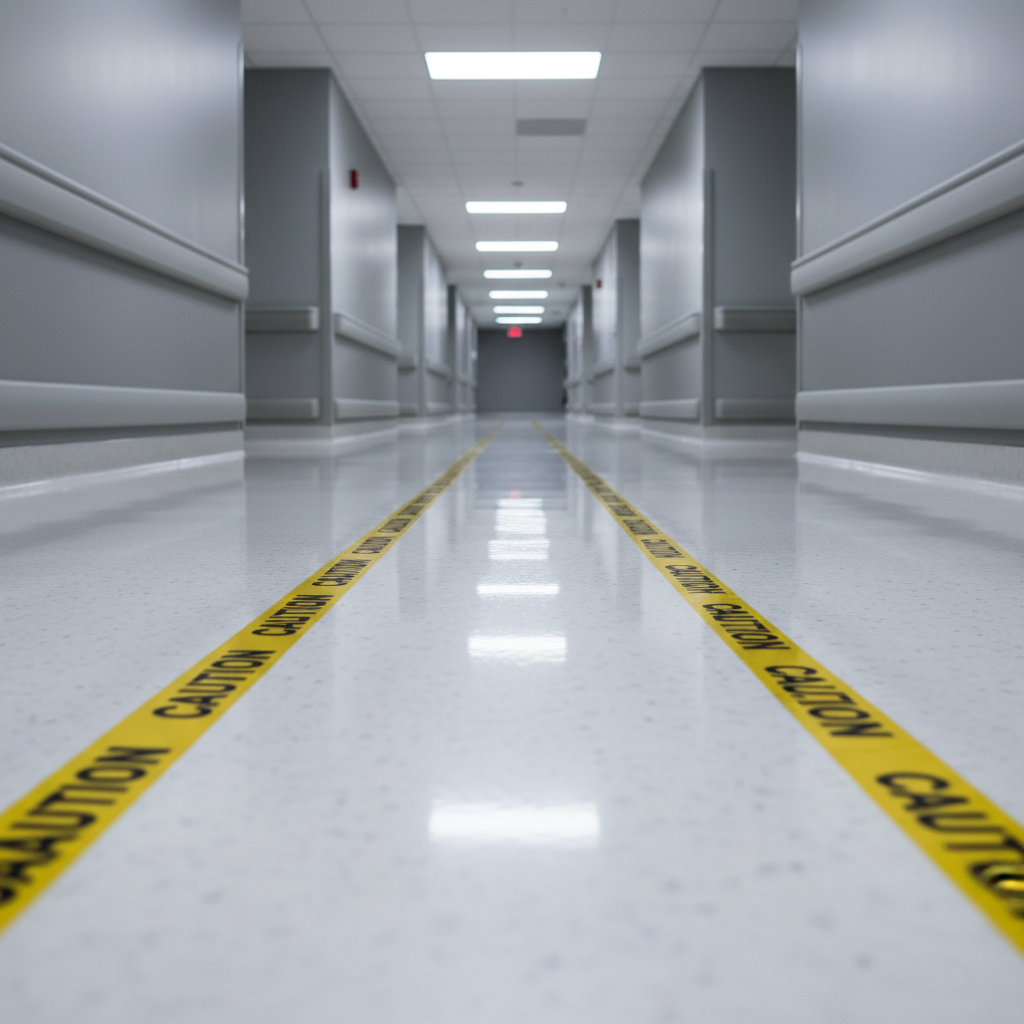
Understanding the regulatory framework of OSHA 29 CFR 1910 Subpart D is the first step toward achieving measurable safety improvements. This subpart, spanning sections 1910.21 through 1910.30, provides the comprehensive standards for all walking-working surfaces in general industry. While specific rules exist for ladders and scaffolding, section 1910.22 serves as the cornerstone by establishing general requirements that apply to every facility, regardless of the industry.
Under 1910.22(a), OSHA mandates a high standard for housekeeping. All places of employment, including passageways, storerooms, and service rooms, must be kept in a clean, orderly, and sanitary condition. This is not merely an aesthetic preference; it is a regulatory requirement designed to eliminate the hidden trip hazards found in cluttered aisles or poorly maintained storage areas. For an OSHA walking-working surfaces Florida small business strategy to be effective, these housekeeping protocols must be documented and consistently enforced.
Floor maintenance is further detailed in 1910.22(a)(2), which requires that the floor of each workroom be maintained in a clean and, so far as possible, dry condition. When wet processes are used, such as in food service or industrial cleaning, the standard requires specific mitigations:
Maintained drainage systems to prevent standing water.
The use of false floors, platforms, or mats to provide dry standing areas.
Routine workplace safety inspections to verify these controls remain functional.
Beyond cleanliness, 1910.22(b) addresses structural safety by requiring employers to ensure that every walking-working surface can support the maximum intended load. In the evolving industrial landscape of Melbourne, where warehouses are often repurposed for heavier machinery or high-density racking, verifying floor load capacities is essential. Identifying these technical gaps during OSHA compliance audits prevents structural failures that could lead to catastrophic falls or equipment damage.
OSHA Pedestrian Walkway Requirements and Clearance Standards
Maintaining structural safety and dry floors leads directly to how space is allocated for daily operations. Business owners frequently ask about the exact dimensional requirements for pedestrian walkways during OSHA compliance audits. A common point of confusion is the minimum width standard. OSHA does not specify a universal inch-count for general pedestrian walkways within 29 CFR 1910 Subpart D. Instead, the regulation mandates that all passageways must be kept free of obstructions and wide enough to ensure safe passage for employees. For designated emergency exit routes under separate subparts, a minimum width of 28 inches is required, which serves as a baseline for general safety.
The requirements become more stringent when material handling equipment enters the equation. For a typical small warehouse in Melbourne, forklifts and motorized pallet jacks often share tight spaces with foot traffic. Under OSHA 1910.176(a), employers must provide sufficient clearance in aisles, at loading docks, and through doorways where mechanical handling equipment is operated. The aisle must be wide enough to allow the safe operation of the machinery without endangering nearby workers, meaning the path must account for the turn radius and load width of the equipment.
To maintain compliance, permanent aisles and passageways must be appropriately marked. Utilizing high-visibility floor paint or durable safety tape to define pedestrian lanes is a standard, effective method. These markings must be maintained so they remain clearly visible despite daily wear. Incorporating these clearance standards into regular workplace safety inspections ensures that pallets, inventory, and trash do not encroach on designated walkways, keeping your OSHA walking-working surfaces Florida small business operations both compliant and efficient.
Florida Specific Challenges: Humidity, Sand, and Summer Storms
Beyond clear aisle markings, Florida's environmental conditions introduce unique physical variables that compromise surface friction. For an OSHA-compliant walking-working surfaces Florida small business, sand management is a critical daily operational task. Dry sand tracked onto sealed concrete or tile floors acts like millions of microscopic ball bearings, drastically reducing the friction required for stable movement. This hazard is often exacerbated by Melbourne’s high relative humidity, which can lead to "sweating slab syndrome." This phenomenon occurs when warm, moist air contacts a cooler floor surface, reaching the dew point and creating a nearly invisible microfilm of water.
Daily summer storms require a proactive spillage response plan that accounts for rapid changes in entryway safety. We recommend installing high-absorbency walk-off mats that extend at least 10 to 12 feet into the facility; this distance is necessary to ensure footwear is sufficiently dried. During hurricane season or peak daily rain cycles, facilities should increase the frequency of workplace safety inspections at all transition points between exterior and interior zones. Incorporating moisture-sensing technology or high-visibility floor fans into your OSHA compliance audits can provide real-time mitigation against the specific humidity levels that lead to recordable slip incidents.
Fall Protection for General Industry and Small Business Workplaces
Managing humidity-related slips is critical at ground level, but environmental factors also influence safety when employees work at heights. Navigating the transition from floor-level hazards to elevated work areas requires a technical understanding of OSHA 1910.28. While construction standards often trigger at 6 feet, the duty to provide fall protection for general industry begins at a height of just 4 feet. For an OSHA walking/working surfaces Florida small business strategy, this means any mezzanine, loading dock, or open-sided platform requires immediate attention. Identifying these triggers during workplace safety inspections prevents the most severe category of workplace injuries.
Compliance follows a strict hierarchy of controls. Engineering controls, such as guardrail systems, are the first line of defense. These are considered passive systems because they protect the worker without requiring active participation. OSHA 1910.29 outlines the specific criteria for these barriers, including the ability to withstand a 200 pound force applied in any downward or outward direction. These systems must include top rails, mid-rails, and toe boards to ensure both personnel and equipment are contained.
When engineering controls are not feasible, employers must pivot to administrative controls or personal fall arrest systems (PFAS). A compliant PFAS includes a full-body harness, a connector, and a certified anchorage point. In Florida's high-moisture environments, hardware must be regularly inspected for corrosion that could compromise structural integrity. Scheduling comprehensive OSHA compliance audits helps businesses determine if their current equipment is correctly rated for their specific height clearances. Furthermore, integrating fall protection into broader safety training ensures that employees can identify when a surface is no longer safe to occupy without additional gear.
OSHA Walking-Working Surfaces Training Requirements 1910.30

The transition from equipment selection to employee competency is governed by OSHA 1910.30. This standard, updated in 2017, mandates that employers provide comprehensive training for every employee who uses personal fall protection or works in high-risk areas. A compliant program must empower staff to identify specific fall hazards and demonstrate the correct procedures for erecting, maintaining, and inspecting fall protection systems. It is not enough to simply provide the gear; workers must understand the physical limitations of their equipment and the rigorous maintenance protocols required for the surfaces they traverse.
For an OSHA walking/working surfaces Florida small business, the diversity of the workforce presents a unique compliance obligation. OSHA requires that all training be delivered in a language and vocabulary the employee understands. In Melbourne and the surrounding regions, this often necessitates multilingual instruction to ensure technical safety concepts, such as anchorage strength and slip-resistance variables, are fully grasped. SEAI Global provides localized safety training solutions designed to overcome these communication barriers. We integrate these sessions with our OSHA compliance audits to verify that classroom knowledge translates directly into safer daily operations on the shop floor or at the medical clinic.
Bridging OSHA and Joint Commission Standards for Healthcare Facilities
Healthcare facilities in Melbourne face a dual regulatory environment where OSHA 1910 Subpart D intersects with Joint Commission Environment of Care (EC) standards, particularly EC.02.06.01. While OSHA focuses on employee safety, the Joint Commission mandates a safe environment for patients and visitors, often requiring stricter slip resistance benchmarks. For an OSHA walking/working surfaces Florida small business operating in the medical sector, achieving a Pendulum Test Value (PTV) of 36 or higher is often the target for mitigating risks on surfaces frequently exposed to liquids or sanitizing agents.
A significant challenge in clinical settings is balancing infection control with slip prevention. High gloss finishes are often preferred for their perceived cleanliness and ease of sterilization, yet these coatings can drastically reduce the Static Coefficient of Friction (SCOF) when even slightly damp. During our workplace safety inspections, we evaluate floor care protocols to ensure that disinfectant residues do not create a latent slip hazard. SEAI Global assists facilities in aligning these requirements through specialized OSHA compliance audits and safety training that addresses the unique friction needs of modern healthcare flooring, such as luxury vinyl tile (LVT) and medical-grade rubber.
Maintaining compliance with OSHA walking and working surface standards is a vital step toward protecting your Florida small business and its employees. While understanding the regulations is essential, implementing them consistently across your job sites requires significant time and attention to detail. If you want expert help navigating these complex requirements, scheduling professional Safety Inspections can provide clarity and peace of mind. SEAI Global is here to support your commitment to a secure workplace whenever you are ready to begin.