
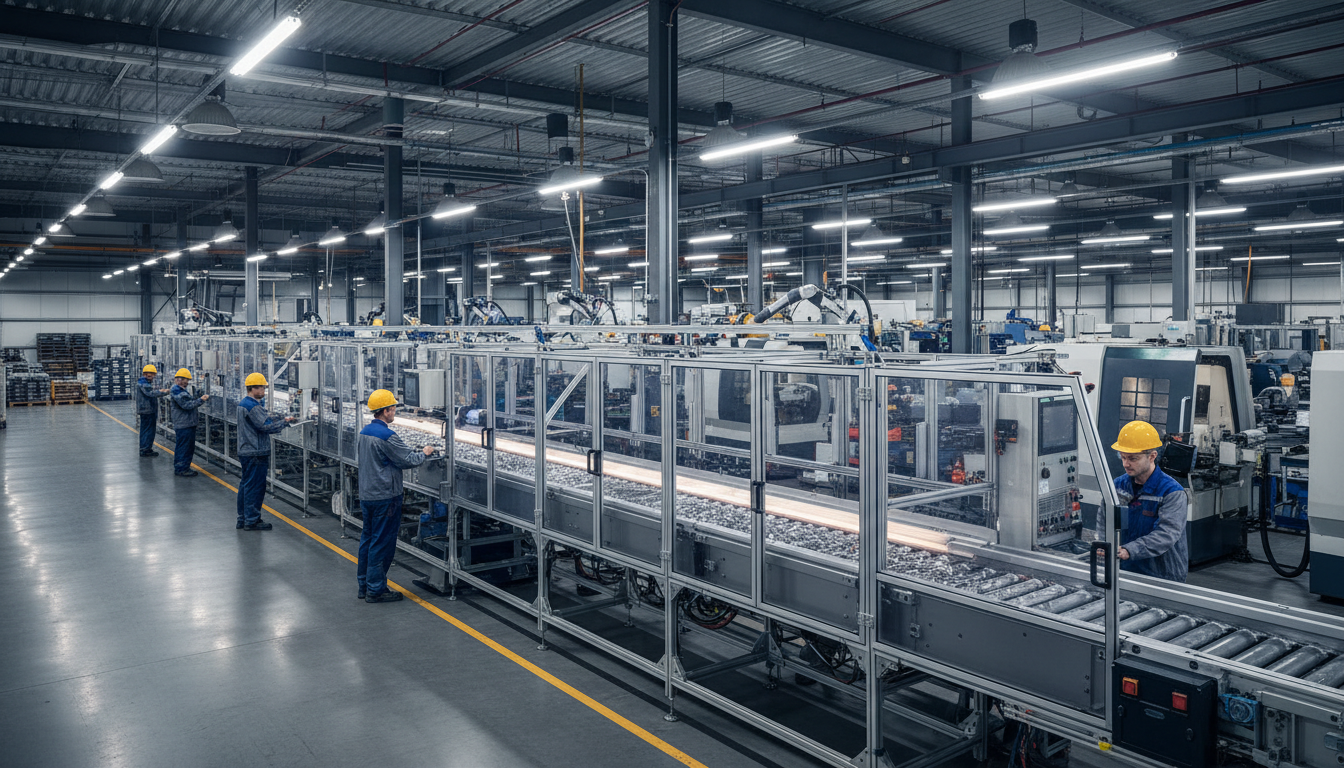
OSHA machine guarding requirements Florida small business operators must meet involve implementing physical barriers or electronic devices to protect workers from hazards like rotating parts, sparks, and nip points. Under standard 1910.212, these guards must be securely fixed to the equipment and must not introduce new safety risks; compliance remains essential for avoiding 2026 penalty increases.
For many Florida small business owners, navigating OSHA compliance feels like aiming at a moving target, especially as we approach 2026. A single missing guard on a lathe or a conveyor belt can lead to devastating workplace injuries and significant financial penalties. These risks are not merely regulatory hurdles; they represent critical vulnerabilities in your operational continuity and employee welfare. Whether you manage a boutique manufacturing facility in Tampa or a specialized healthcare laboratory in Miami, maintaining rigorous safety standards is essential for long term success. In this guide, we will break down the core components of OSHA Standard 1910.212, explore the alignment between Joint Commission and OSHA requirements in healthcare, and provide a practical self inspection checklist designed specifically for small teams. You will gain the expertise needed to transform machine guarding from a compliance headache into a robust pillar of your safety culture.
Why Machine Guarding Matters for Florida Employers in 2026
Florida's industrial landscape is evolving rapidly. From the medical device manufacturers along Melbourne's Space Coast to the high-volume food processors in Orlando, the machinery driving this growth presents significant operational risks. While Florida operates under federal OSHA jurisdiction, the practical application of OSHA machine guarding requirements Florida small business owners must navigate is often complex and site-specific.
Relying on a history of clean records is a dangerous gamble; 'it won't happen to us' is not a legitimate compliance strategy. A single lapse in a point-of-operation guard can lead to life-altering injuries and severe financial penalties. As we move through 2026, safety trends are shifting toward human-centric design and sophisticated automated fail-safes that account for human error rather than just punishing it.
Proactive management requires more than just installing a cage. It involves rigorous workplace safety inspections and comprehensive OSHA compliance audits to identify gaps before an inspector or an accident does. For small teams, these safeguards are the primary line of defense against the rising costs of non-compliance and the devastating impact of workplace trauma.
Core Components of OSHA Standard 1910.212
OSHA Standard 1910.212 serves as the general requirement for all machines. At its core, the standard mandates that one or more methods of machine guarding must be provided to protect the operator and other employees in the machine area from hazards. These hazards are categorized into several primary zones: the point of operation where work is performed on the material; nip points where parts rotate toward each other; rotating parts such as spindles or flywheels; and flying chips or sparks generated during processing.
Small business owners often mistakenly believe these rules only apply to massive hydraulic presses or assembly lines. In reality, the same OSHA machine guarding requirements Florida small business owners face in manufacturing apply to the drill press in a maintenance shop, the power saw at a construction site, and even the commercial mixer in a bakery. For instance, a commercial mixer's rotating beaters are a significant point of operation hazard that requires a bowl guard to prevent hand entry. Similarly, a simple bench grinder requires properly adjusted work rests and tongue guards to manage the risk of flying fragments.
A critical, often overlooked detail in 1910.212 is that the guard itself must not become a hazard. A poorly designed guard with jagged edges, or one that creates a pinch point during its own movement, fails compliance. Guards should also not obstruct the operator's view to the point where they might bypass the safety feature just to see their work. Ensuring your equipment meets these specific criteria is a fundamental part of OSHA compliance audits. By identifying these nuances, businesses can develop targeted safety training programs that address real world risks before they lead to an enforcement action.
The Four Pillars of Effective Machine Safeguards

Applying the correct safeguarding method is the next step in translating theoretical standards into a physical defense system. The industry recognizes four primary types of guards, each serving a specific operational need while fulfilling the OSHA machine guarding requirements Florida small business owners face across diverse industrial environments.
Fixed guards are the preferred first line of defense. These are permanent barriers, such as a heavy wire mesh enclosure around a drive belt, that do not have moving parts and require tools for removal. When a process requires frequent access for clearing jams or material feeding, an interlocked guard is the necessary alternative. These guards are designed to shut off or disengage the machine's power source the moment the barrier is opened, effectively tripping the circuit to prevent operation until the guard is reset. This technology is vital for high-frequency access points in Florida packaging facilities where speed and safety must coexist.
Adjustable guards provide flexibility for varying production needs, such as a guard on a vertical drill press that a technician manually positions to account for different workpiece heights. In contrast, self-adjusting guards use the movement of the material itself to open the barrier, such as the spring-loaded guard on a circular saw blade. A critical component of implementing these pillars during workplace safety inspections is the rigorous application of the OSHA machine guarding distance chart. This technical tool determines how far a guard must be positioned from the danger zone based on the size of the guard's opening, ensuring that a worker’s hand cannot reach the point of operation. Verifying these measurements is a core focus of our OSHA compliance audits to ensure total protection.
Machine Guarding in Healthcare: Joint Commission and OSHA Alignment
Building on the technical requirements of guards, it is important to recognize that these hazards extend beyond the factory floor and into clinical environments. Healthcare facilities in Melbourne often overlook machine guarding in non-clinical areas, yet the risks are just as prevalent. High-capacity hospital laundries utilize industrial folders and presses with significant nip points and rotating parts that fall directly under OSHA 1910.212 jurisdiction. Laboratory centrifuges, if not properly interlocked and shielded, present high-velocity projectile risks during a mechanical failure. Furthermore, facility maintenance shops within hospitals house the same grinders and saws found in manufacturing, requiring the same rigorous workplace safety inspections.
For Melbourne healthcare providers, adherence to OSHA machine guarding requirements Florida small business owners must follow is also a strategic move for accreditation. The Joint Commission evaluates the Environment of Care (EC) through standards such as EC.02.01.01, which requires organizations to identify and manage safety and security risks. By conducting regular OSHA compliance audits focused on machine safety, facilities ensure they are prepared for Joint Commission surveys. Documenting these physical safeguards proves that the organization is proactively mitigating hazards, effectively bridging the gap between federal labor laws and healthcare quality standards. This dual alignment protects the staff while maintaining the facility's standing with accreditation bodies.
Common Machine Guarding Violations and 2025 Penalty Trends
This protective alignment is often tested when inspectors identify the most common mechanical oversights. Machine guarding consistently ranks as one of the top ten most frequently cited OSHA standards across all industries. This high frequency often stems from a lack of awareness regarding specific subsections, such as OSHA 1910.212(b), which mandates that machines designed for a fixed location must be securely anchored to prevent walking or moving. Small shops in Brevard County often overlook this for bench-mounted equipment like drill presses or sanders, assuming their weight alone provides sufficient stability. Another frequent citation involves abrasive wheel machinery where missing eye protection shields or improperly adjusted work rests create immediate safety hazards.
The financial stakes for non-compliance have reached critical levels. Following recent penalty adjustments, a single Serious violation can now cost a firm over 16,000 dollars, while Willful or Repeat citations can surpass 160,000 dollars. For a company with fewer than 50 employees, these escalating fines represent a significant operational risk that can jeopardize the business itself. Relying on workplace safety inspections to identify these technical lapses is far more cost-effective than reactive legal defense. Implementing routine OSHA compliance audits ensures that companies meet the specific OSHA machine guarding requirements Florida small business owners must uphold, shielding both their personnel and their bottom line from these rising enforcement costs.
OSHA Machine Guarding Training Requirements for Small Teams

Compliance does not end with the physical installation of a barrier; OSHA expects a fully informed workforce. To meet the OSHA machine guarding requirements Florida small business owners are held to, employers must provide comprehensive OSHA machine guarding training that enables operators to identify potential hazards and understand the specific function of every safeguard. This instruction should explicitly cover how the guards provide protection, the methods for their proper use, and the immediate protocol for reporting a guard that is missing, damaged, or bypassed.
Documenting this training is as critical as the instruction itself. During OSHA compliance audits, an inspector will look for signed training logs and performance evaluations that verify each employee’s competency. For Florida’s diverse industrial sectors, this often requires a bilingual approach. OSHA mandates that training be conducted in a language the employee understands. Consequently, small teams in Melbourne and throughout the Space Coast must frequently provide materials in both English and Spanish to ensure universal comprehension. Integrating these elements into your safety training programs ensures that guards remain effective tools rather than neglected obstacles, ultimately validating the results of your workplace safety inspections.
Florida Small Business Machine Guarding Self Inspection Checklist

Integrating a checklist into your monthly workplace safety inspections provides a structured method for maintaining long term compliance. To meet the OSHA machine guarding requirements Florida small business owners must document, use the following criteria derived from standards 1910.212 and 1910.219 during your facility walkthroughs:
Are all point of operation guards securely attached and unable to be bypassed without the use of tools?
Is it impossible for an operator to reach around, under, or through the guard into the danger zone based on the OSHA distance chart?
Are machines designed for a fixed location, such as bench grinders and drill presses, securely anchored to the floor or work surface to prevent walking?
Do guards for rotating parts and nip points, including belts and pulleys, provide complete enclosure of the hazard?
Are self adjusting guards moving freely without sticking or leaving the blade exposed?
Does the guard itself lack sharp edges, burrs, or jagged surfaces that could cause secondary injuries?
Regularly applying these questions during OSHA compliance audits helps identify mechanical wear or unauthorized modifications before they trigger a citation. If any piece of equipment fails these points, it should be tagged out immediately until the necessary safety features are restored.