Florida small businesses must update their hazard communication programs, chemical labels, and safety data sheets to comply with revised OSHA standards by the upcoming deadline. Using a HazCom checklist for November 20, 2026, this Florida guide ensures that employers complete required chemical inventory audits and staff training to help avoid penalties and maintain safety.
Navigating the complexities of federal safety mandates often feels like a moving target for Florida small business owners. With the November 20, 2026, deadline for Hazard Communication Standard alignment rapidly approaching, the window for transition is narrowing. Failure to integrate the GHS Revision updates into your daily operations poses significant risks, including costly OSHA citations and compromised workplace safety. At SEAI Global LLC, we recognize that compliance requires more than a cursory review of documents; it demands a systematic overhaul of your safety protocols. This guide provides a definitive roadmap to help ensure your business remains resilient and compliant. You will learn how to conduct a comprehensive chemical inventory, audit your Safety Data Sheet library, and verify workplace labeling. Furthermore, we outline the specific training and documentation requirements necessary to protect your workforce and your bottom line in the unique Florida regulatory landscape.
How to Use This Checklist
Employers must fully adopt the Globally Harmonized System (GHS) Revision 7 updates by November 20, 2026. Missing that deadline can mean costly OSHA citations. This checklist walks you through the three core requirements in plain terms, so you can quickly see where your program stands before the deadline hits. Check the boxes that apply to your operation. Any blank box is a gap worth addressing.
Part 1: Your Written HazCom Program
Your written program has been revised to reflect the new GHS Revision 7 classification procedures — not just a date change on the cover sheet.
Your program accounts for "reasonably anticipated" uses of each chemical, not only its intended use, including downstream reactions.
Your program reflects the expanded aerosol categories and updated hazard classification rules.
Your program documents how you will identify and replace legacy Revision 3 SDSs as manufacturers release updates.
You specify small-container labeling procedures under 100ml and 3ml relief, confirming full hazard information stays accessible via outer packaging.
Someone on your team is named as responsible for maintaining and updating the written program going forward.
Part 2: Workplace Labels and SDSs
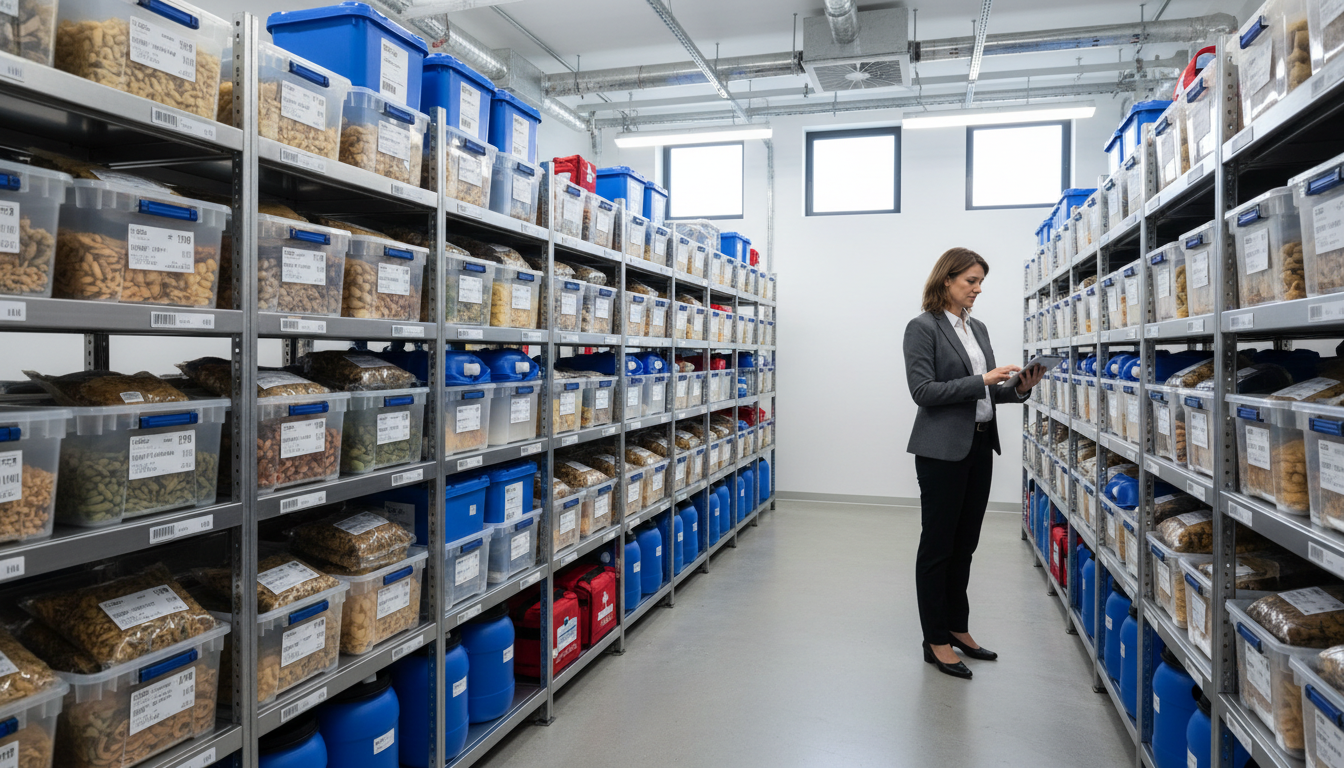
You completed a physical floor walk of every storage area, maintenance closet, and workstation to build a current chemical inventory.
Every workplace (secondary) container — spray bottles, jugs, transfer tanks, bulk-chemical repacks — has been reviewed for compliance.
Your SDS library has been audited, not inherited. Section 2 (Hazard Identification) reflects "reasonably anticipated" uses, and Section 3 (Composition) uses standardized concentration ranges.
Aerosols have been re-checked against the three new flammability categories, and any changed pictograms or signal words are applied.
Small containers under 100ml (and under 3ml) apply the labeling relief correctly, with missing information still available via outer packaging or the SDS.
Every unlabeled or illegible container has been flagged for replacement, including those degraded by Florida heat and humidity.
Part 3: Employee Training and Documentation
Training covers the new SDS format and revised hazard classifications workers will actually encounter, not generic slides.
Training is built around your actual chemical inventory, including the updated aerosol categories.
Training is documented with sign-in sheets and dates, and new hires and transferred employees are covered by a training trigger (before initial assignment or on a new hazard).
How to Score Your Readiness
14–15 checked: You are in strong shape. Focus on the one or two gaps that remain.
9–13 checked: You have a real plan but meaningful gaps. Work through the blanks methodically, starting with your written program.
8 or fewer checked: You are at elevated risk of falling short by the deadline. A professional compliance audit will save you time and exposure.
The deadline is not a weekend project. If you found gaps on this list, SEAI Global LLC can help you close them before November 20, 2026.
Get Your Free Ready-for-Review Checklist
Want a clean, shareable version of this checklist to work through with your team? Request the full checklist and a free consultation, and we'll email you a ready-to-use copy — along with a quick review of your readiness gaps before the deadline.
If you want expert help navigating these complex regulations, our team is ready to support your efforts. We provide comprehensive OSHA Compliance audits tailored to your specific industry needs. Partnering with SEAI Global LLC ensures that your facility stays ahead of evolving standards while maintaining a culture of workplace safety.