

Small businesses in Florida must maintain OSHA electrical safety standards by ensuring proper grounding, providing GFCI protection, and keeping clear access to all electrical panels. Compliance requires following 29 CFR 1910 regulations and implementing a formal OSHA electrical safety Florida small business program that includes regular employee training. These measures prevent common violations like the misuse of temporary wiring while ensuring workplace protection for 2026.
For Florida small business owners, the threat of an OSHA inspection often feels like a looming storm, especially regarding electrical safety. A single wiring oversight or a misunderstood standard can lead to devastating fines, serious injury, or operational downtime. In our state, the challenges are intensified by high humidity and coastal salt spray that accelerate equipment degradation; these factors make compliance a critical operational necessity rather than a mere legal hurdle. Maintaining a safe workplace requires a deep understanding of how federal regulations apply to our specific local environment. This 2026 guide clarifies the distinction between 1910 and 1926 standards, identifies common regional hazards, and outlines essential protocols for GFCI protection and lockout tagout. You will gain a practical framework for self inspection to ensure your team stays protected while your business remains fully compliant with current safety mandates.
Understanding OSHA Electrical Safety Standards: 1910 vs 1926
Navigating the regulatory landscape for OSHA electrical safety Florida small business compliance requires identifying which specific set of federal standards governs your daily operations. OSHA distinguishes between two primary categories: 29 CFR 1910 for General Industry and 29 CFR 1926 for Construction. For a local retail shop or office in Melbourne, the General Industry standards under Subpart S typically apply. These regulations focus on the design of electrical systems and the safety-related work practices necessary to protect employees in permanent, established environments.
Conversely, a local electrical contractor or a firm performing significant renovations must adhere to the 29 CFR 1926 standards. These are more stringent because construction environments are inherently dynamic; Subpart K of the construction code mandates rigorous controls for temporary wiring and active job sites that do not apply to a fixed office setting. While 1910 ensures that equipment is UL listed and energized parts above 50 volts are guarded, 1926 addresses the heightened volatility of the build process. Business owners can consult the Small Business Safety and Health Handbook for self-inspection templates to start this process. For technical validation and to ensure full adherence to these complex federal requirements, many firms utilize workplace safety inspections or professional OSHA compliance audits.
The Most Common OSHA Electrical Violations for Florida Employers

Identifying the most frequent citations issued by inspectors allows an organization to prioritize its risk mitigation efforts. Data indicates that electricity causes approximately 150 workplace fatalities annually, yet many of the most common citations involve simple, preventable oversights. For an OSHA electrical safety Florida small business strategy to be effective, it must address the specific physical hazards found in retail, light industrial, and healthcare settings.
The most prevalent violation is the improper use of flexible cords, often referred to as the extension cord trap. Under 29 CFR 1910.305, extension cords are classified as temporary wiring and must never be used as a substitute for the fixed wiring of a structure. Inspectors frequently cite businesses for running cords through holes in walls, ceilings, or floors, or threading them through doorways and windows where they are subject to physical damage. Additionally, plugging power strips into other power strips, known as daisy chaining, creates a significant fire hazard that violates the equipment's UL listing.
Electrical panel accessibility and labeling are equally critical. OSHA standard 29 CFR 1910.303(g) mandates that a clear working space be maintained in front of all electrical equipment. This space must be at least 30 inches wide and 36 inches deep to allow for safe operation and maintenance. In many Florida warehouses or backrooms, these areas become inadvertently blocked by inventory or cleaning supplies. Furthermore, every circuit breaker or switch must be clearly and legibly marked to indicate its specific purpose; labels like "Lights" or "Outlets" are often too vague if they do not specify which room or equipment they control.
Finally, improper grounding of equipment and the lack of guarding for energized parts above 50 volts remain top concerns. Ensuring all equipment is properly grounded protects employees from shock if a fault occurs. To identify these hazards before an inspector does, many firms schedule workplace safety inspections or comprehensive professional OSHA compliance audits to verify that their physical plant meets federal safety benchmarks.
Florida Specific Electrical Hazards: Humidity, Corrosion, and Storms
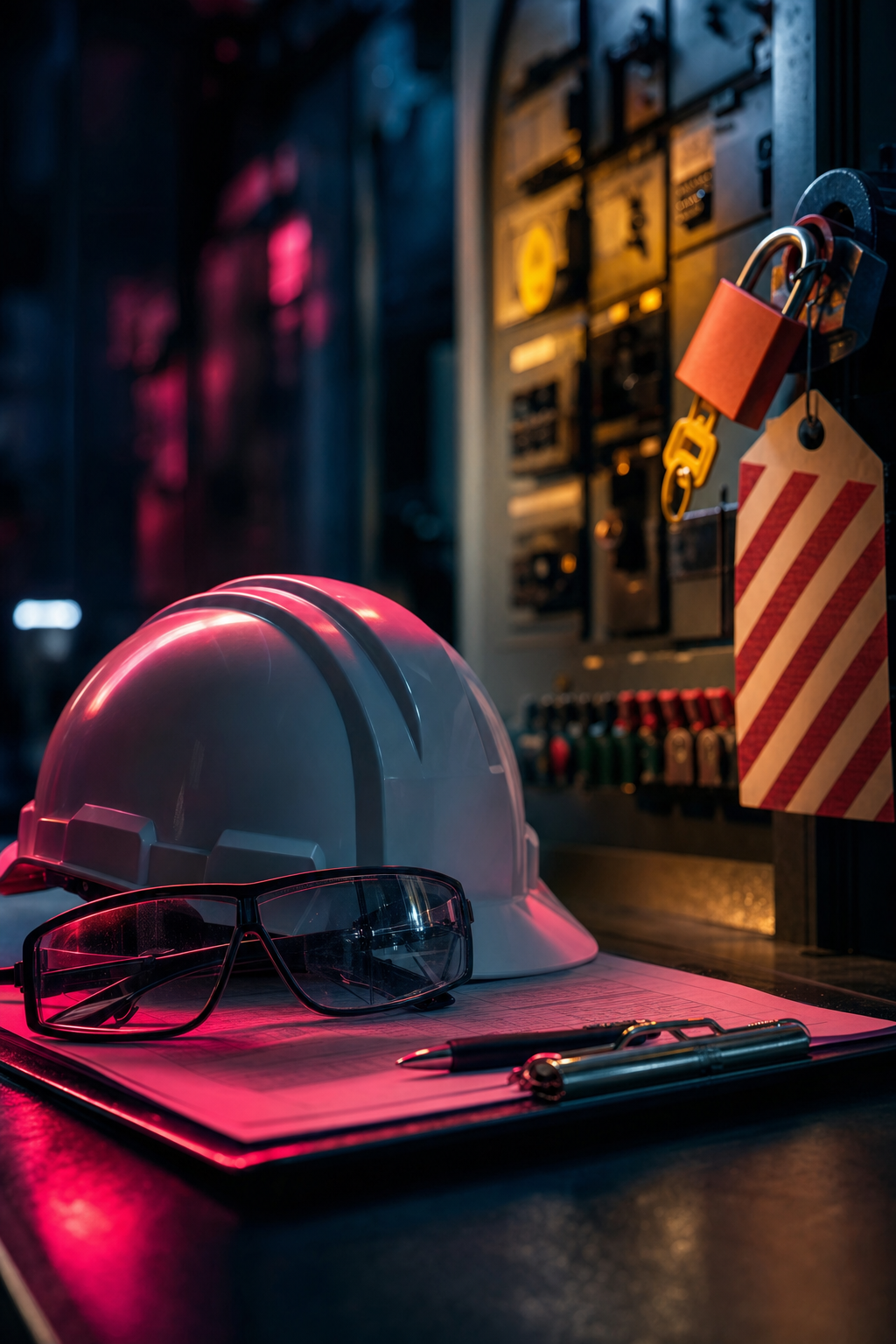
While OSHA standards are federal, the environmental stressors in Melbourne and across the Space Coast create localized risks that require specific attention. Florida’s pervasive humidity and salt-laden air act as catalysts for rapid oxidation on copper and aluminum components. This corrosion compromises the integrity of electrical connections, leading to increased resistance, overheating, and potential arcing. In a high-moisture environment, these conditions significantly elevate the risk of electrical fires that might not be as prevalent in drier climates.
To mitigate these risks, Florida employers must ensure that outdoor electrical equipment is housed in appropriate enclosures. While NEMA 3R enclosures provide basic protection against falling rain, facilities located near the coast should prioritize NEMA 4X ratings. These enclosures offer superior protection against corrosion and wind-blown dust and rain, ensuring that sensitive components remain isolated from the corrosive Atlantic air. Selecting the right hardware is a critical component of a robust workplace safety inspections program.
Seasonal hurricane readiness requires a specific protocol for electrical systems. If a facility experiences flooding, OSHA safety practices dictate that equipment must be thoroughly cleaned and dried before re-energizing. Components that have been submerged, particularly breakers and fuses, often require replacement because internal residue can lead to catastrophic failure upon restart. Establishing a formal shutdown procedure before a storm and conducting professional OSHA compliance audits before restoring power are essential steps. For teams managing complex industrial systems, specialized safety training helps employees identify compromised equipment that may look functional but remains a hidden hazard. This proactive approach ensures that an OSHA electrical safety Florida small business plan accounts for the state’s unique atmospheric volatility.
Requirements for GFCI Protection in the Workplace
In environments where moisture is a constant factor, Ground Fault Circuit Interrupters (GFCIs) serve as a primary line of defense against electrocution. These devices monitor the flow of current and instantly disconnect power if a leak to ground is detected, reacting in as little as 1/40th of a second. For a robust OSHA electrical safety Florida small business plan, GFCIs are mandatory in any wet or damp location. This includes commercial kitchens where outlets are within six feet of a sink, outdoor maintenance zones, and areas where cord-and-plug equipment is used on damp concrete or near standing water.
OSHA standards require that these safety devices be maintained in a functional state, which necessitates regular testing. While many employers install GFCIs, they often fail to implement a recurring testing log, leading to preventable citations during workplace safety inspections. In Florida’s corrosive coastal air, the internal mechanisms of a GFCI can seize or fail prematurely. Business owners should conduct monthly push-button tests to ensure the trip mechanism remains responsive. Verifying these installations through professional OSHA compliance audits ensures that both temporary power at job sites and permanent outlets in humid warehouses provide the intended level of life-safety protection.
Lockout Tagout (LOTO) for Electrical Maintenance
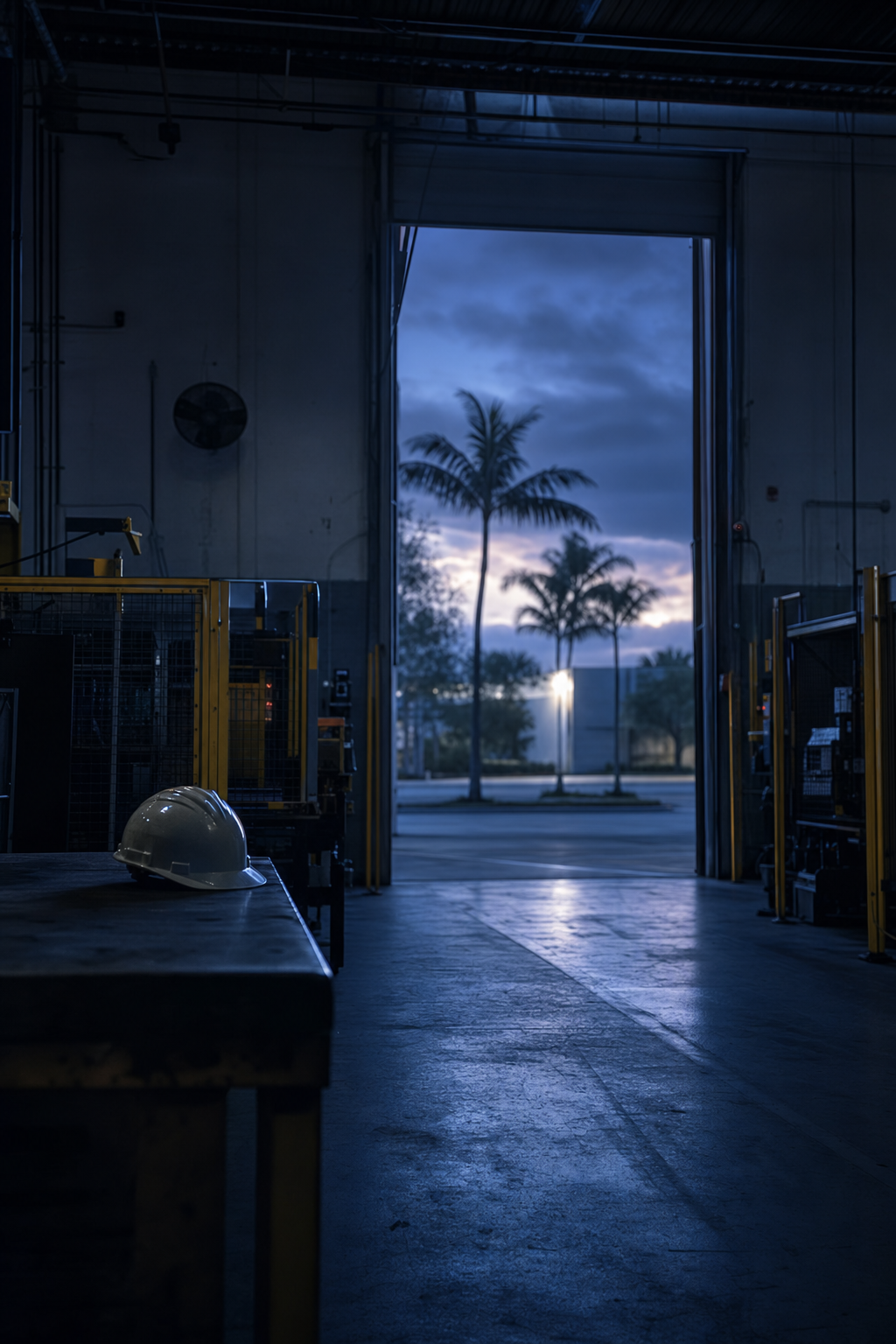
Beyond grounding and GFCI protection, securing hazardous energy during maintenance is a fundamental requirement of 29 CFR 1910.147. For a robust OSHA electrical safety Florida small business plan to be compliant, it must include a written energy control program. This document must outline specific, step by step procedures for shutting down, isolating, and securing machinery to prevent the accidental release of energy. This is not merely a best practice; it is a mandatory federal requirement for any facility where employees service equipment that could unexpectedly energize.
OSHA distinguishes between two critical roles within this program. Authorized employees are the trained individuals who physically apply the locks and tags to energy-isolating devices. Affected employees are those whose jobs are impacted by the maintenance or who work in the area where the service is being performed. While affected employees do not perform the lockout, they must be trained to recognize lockout devices and understand the danger of attempting to restart equipment. SEAI Global LLC provides specialized safety training tailored to these specific roles. Incorporating these protocols into regular workplace safety inspections ensures that hardware remains in good repair and that staff remain vigilant. For businesses lacking a formal program, professional OSHA compliance audits can help establish the necessary documentation and physical safeguards to meet the 1910.147 standard.
Qualified vs Unqualified Workers: Training and PPE Requirements
OSHA 1910.332 establishes a clear line between personnel based on their training and technical knowledge. A qualified worker is one who has been specifically trained to recognize and avoid electrical hazards while working on or near exposed energized parts. Conversely, an unqualified employee, such as an office manager or general retail clerk, lacks this technical training. These individuals should never perform tasks that involve opening high voltage panels or resetting breakers where exposure to energized components is possible. For an effective OSHA electrical safety Florida small business program, these roles must be strictly defined and enforced.
Documentation is the cornerstone of compliance for qualified staff. Employers must maintain records that prove workers have received specialized safety training covering the construction and operation of equipment. Furthermore, when work involves potential arc flash hazards, businesses must look to NFPA 70E standards. This requires the use of specialized personal protective equipment (PPE), including arc-rated clothing, face shields, and voltage-rated insulated tools. Implementing these requirements often requires professional OSHA compliance audits to verify that PPE kits are complete and that arc flash boundaries are correctly calculated. Relying on workplace safety inspections helps ensure that only authorized, properly equipped personnel are engaging with your facility's electrical infrastructure.
Self-Inspection Checklist for Electrical Safety
While formal training and PPE ensure that qualified workers remain protected, business owners must maintain a baseline of environmental safety through consistent monitoring. Identifying physical hazards early prevents costly citations and, more importantly, keeps employees safe from preventable shocks. Use the following checklist as a starting point for your internal workplace safety inspections to gauge your facility’s alignment with federal requirements.
Are all electrical panels, circuit breakers, and switchboards clearly and legibly labeled to identify their specific purpose?
Is a clear working space of at least 3 feet deep by 30 inches wide maintained in front of all electrical panels at all times?
Are extension cords in good physical repair, used only for temporary tasks, and never run through walls, ceilings, or doorways?
Are all electrical outlets located within 6 feet of a water source or in damp locations equipped with functional GFCI protection?
Are all power strips plugged directly into a wall outlet rather than being daisy-chained together?
Are energized parts operating at 50 volts or more properly guarded against accidental contact?
Is there a written Lockout/Tagout program and the necessary hardware available for authorized employees to isolate energy?
This self-assessment serves as an initial screen for your OSHA electrical safety Florida small business strategy. However, hidden technical risks like internal corrosion or arc flash hazards require a deeper dive. Contact SEAI Global LLC to schedule professional OSHA compliance audits that provide a comprehensive, expert evaluation of your facility’s electrical infrastructure.