
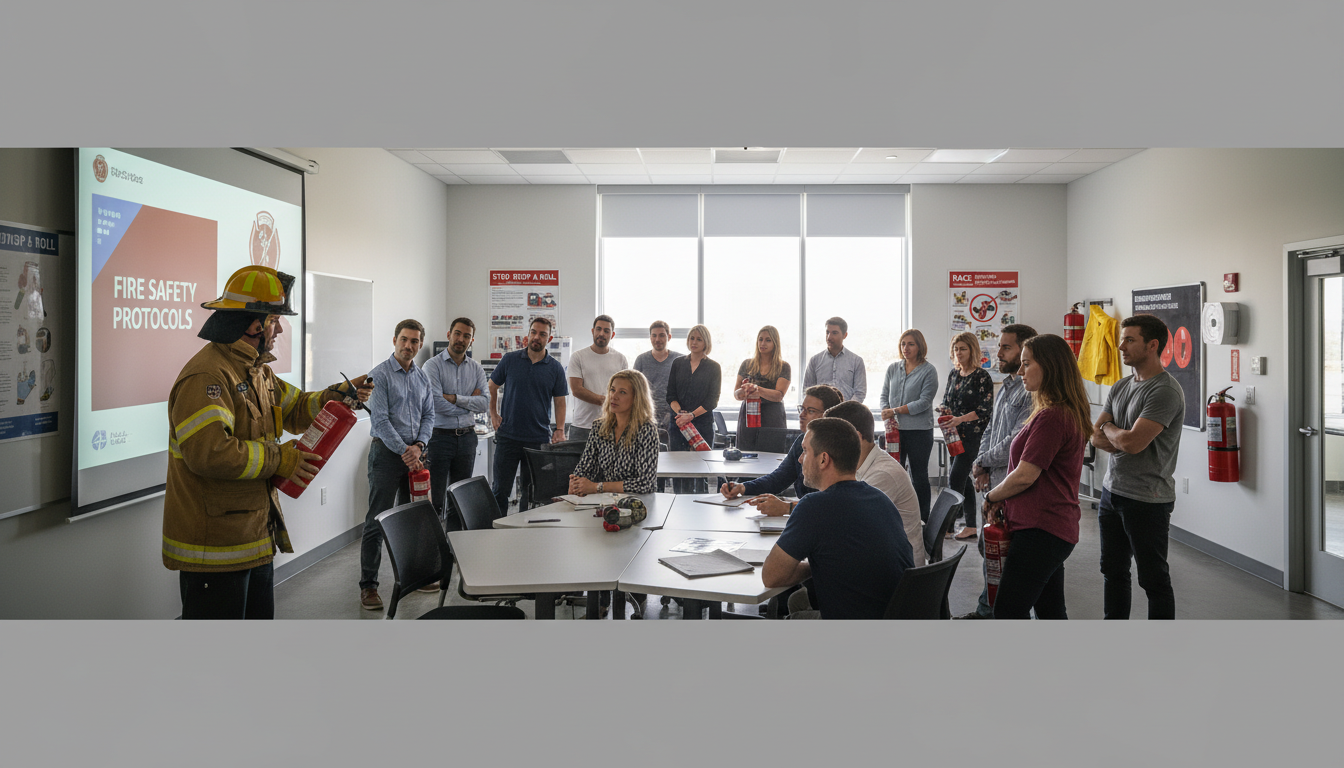
OSHA new employee safety orientation requirements mandate that employers provide task and hazard specific training before workers are exposed to job site risks. While no single universal program exists, businesses must cover emergency procedures, fire safety, and equipment operation to comply with various performance based standards. Employers should document this training using a checklist to ensure all regulatory obligations are met before work begins.
Onboarding new talent often feels like a frantic race against the clock, yet rushing through safety training creates a liability that no small business can afford. For many leaders, the challenge lies in translating complex federal mandates into a practical, repeatable workflow that protects both the worker and the bottom line. Compliance is not merely a box to check; it is a foundational risk management strategy that prevents workplace injuries and protects your organization from the escalating costs of OSHA citations. This guide provides a comprehensive roadmap for mastering new employee safety orientation in 2026. We will detail the specific requirements for hazard communication, explore the necessity of Florida safety committees, and provide a framework for building a robust training matrix. By the end, you will have an actionable plan to ensure every new hire is prepared and every record is ready for an inspector.
Why New Hire Safety Orientation is a Compliance Priority
New employees are three times more likely to suffer workplace injuries than veterans. For a small business in Melbourne, Florida, this vulnerability represents more than just a safety concern; it is a profound financial risk. A single recordable incident can lead to devastating workers compensation costs and hefty OSHA fines that threaten the solvency of a growing enterprise.
Regulatory compliance begins with the General Duty Clause of the OSH Act, which mandates that every employer provide a workplace free from recognized hazards likely to cause death or serious physical harm. Establishing rigorous OSHA safety training protocols serves as the primary mechanism for meeting this legal obligation. By prioritizing safety on day one, businesses demonstrate a good faith effort to identify and mitigate risks before a new hire even steps onto the production floor or job site.
In the eyes of an inspector, the lack of a structured onboarding process is often viewed as a systemic failure to manage safety. Meeting OSHA new employee safety orientation requirements is not merely a box to check during HR onboarding; it is the first line of defense in a comprehensive risk management strategy designed to protect both the worker and the company’s longevity.
The Myth of the Single Standard: Navigating OSHA Training Requirements
Navigating these risk management strategies requires dismantling the misconception that a single, catch all regulation defines OSHA new employee safety orientation requirements. In reality, OSHA does not provide a universal curriculum for onboarding. Instead, the agency distributes training obligations across dozens of hazard specific standards. Compliance is not a one size fits all endeavor; it is a modular process dictated by the specific environment and tasks assigned to the worker.
For most businesses in Melbourne, these requirements fall under two primary categories. The General Industry standards, located in 29 CFR Part 1910, apply to manufacturing, healthcare, and professional office settings. Conversely, the Construction standards in 29 CFR Part 1926 govern building, renovation, and demolition sites. Identifying which regulatory framework applies to your facility is a critical step during workplace safety inspections to ensure no specific hazard is overlooked.
Regardless of the industry, two fundamental rules apply to all training modules. First, instruction must be provided in a language and vocabulary the employee understands. If a worker is primarily Spanish speaking, providing training materials exclusively in English does not meet the legal threshold for comprehension. Second, this training must be completed before the employee is exposed to any workplace hazards. Assigning a new hire to the production floor with a promise to conduct safety training the following week is a direct violation that leaves the company vulnerable. Rigorous OSHA compliance audits frequently show that the timing of training is just as critical as the content itself. By integrating these specific standards into the first few hours of employment, businesses ensure that safety is treated as a prerequisite for work rather than a secondary administrative task.
Essential Components of an OSHA Compliant Safety Orientation Checklist

To bridge the gap between regulatory theory and day-one operations, companies must develop a structured onboarding process. A comprehensive checklist ensures that no critical safety information is missed during the rush of a new hire's first week. This tactical approach satisfies several OSHA new employee safety orientation requirements while providing the worker with the tools needed to navigate their environment safely.
Every orientation should include these foundational elements:
Emergency Exit Locations and Evacuation Routes: Show the worker every viable exit and the designated outdoor muster point for their specific work area.
Fire Extinguisher Locations: Identify where extinguishers are mounted and explain the company policy regarding their use and the specific types of fires they handle.
First Aid Kit and Medical Supply Placement: Point out the location of kits, AEDs, and eyewash stations, ensuring the employee knows who the designated first aid providers are on-site.
Incident Reporting Procedures: Explicitly teach how to report a workplace injury, illness, or a near-miss incident immediately and without fear of retaliation.
Specific Equipment Hazards: Provide hands-on instruction for any specialized machinery, such as forklifts, pallet jacks, or high-power tools, before the employee operates them.
Personal Protective Equipment (PPE): Identify what gear is required for specific tasks and demonstrate the proper fit, maintenance, and storage of that equipment.
In Melbourne's diverse industrial landscape, from aerospace manufacturing to healthcare, these basics often require supplement through regular workplace safety inspections. For instance, if a worker will be exposed to hazardous substances, they must receive targeted OSHA safety training regarding the specific chemicals in their department. This checklist serves as the baseline, but the documentation must reflect the specific risks found in the worker's unique environment to remain fully compliant.
The Hazard Communication Standard: A Non Negotiable Orientation Step

Transitioning from general site basics to technical safety requires a deep dive into the Hazard Communication Standard, codified under 29 CFR 1910.1200. This regulation is consistently among the most frequently cited violations for small businesses during OSHA compliance audits. It is not enough to simply maintain a binder of papers in a back office; new hires must be trained on the Right to Know and Right to Understand the specific chemical hazards present in their immediate work area on day one.
Orientation must verify that every employee can locate and interpret Safety Data Sheets (SDS), whether they are stored in a physical binder or a digital database. They must also demonstrate an ability to recognize the Global Harmonized System (GHS) pictograms and signal words found on primary and secondary containers. In environments common to Melbourne, such as aerospace manufacturing or healthcare labs, missing this step in OSHA safety training creates an immediate liability. Documenting that an employee understands how to handle a spill or accidental exposure for the specific chemicals they will utilize is a non negotiable component of a defensible safety program.
PPE and Emergency Action Plans: Preparing New Employees for the First Day
Beyond understanding chemical hazards, the orientation must cover physical protection through Personal Protective Equipment (PPE). Under 29 CFR 1910.132, simply providing gloves or safety glasses is insufficient. Employers must demonstrate that the employee knows when PPE is necessary, what specific gear is required for their task, and how to properly don, doff, adjust, and wear it. Furthermore, the training must address the limitations of the equipment and the proper methods for maintenance, useful life, and disposal. If a worker in a Melbourne manufacturing plant does not know how to inspect their fall protection harness for wear, the employer has failed to meet a core component of the OSHA new employee safety orientation requirements.
Physical protection also extends to the facility's Emergency Action Plan (EAP). Every new hire must be briefed on the specific alarm signals, whether they are audible sirens or visual strobes, used to trigger an evacuation. They must also physically walk the path to their designated muster point. For small businesses in the Space Coast region, this plan should account for localized risks, ensuring that every individual knows exactly where to report for a head count. Regular workplace safety inspections often reveal that while veteran staff know the drill, new hires are frequently left in the dark, a gap that can be corrected through hands-on OSHA safety training during the first shift.
Safety Committees for Small Businesses: Are They Mandatory in Florida?
Federal OSHA does not mandate safety committees for private sector employers, but for a Melbourne based business, the decision involves more than just federal law. In Florida, the regulatory landscape has evolved from historical mandates under the Florida Occupational Health and Safety Law toward a model centered on voluntary best practices and financial incentives. While no longer strictly required by state law for every small business, forming a committee is a cornerstone of professional risk management.
Maintaining a formal safety committee can qualify Florida employers for a 2% discount on workers compensation premiums under Florida Statute 627.0915. Beyond these savings, a committee acts as an internal oversight body that strengthens the results of workplace safety inspections by involving employees in hazard identification.
This group also serves as the administrative engine for your safety program. A primary function of the committee is to audit the training matrix, ensuring that the OSHA new employee safety orientation requirements are met for every new hire and that no gaps exist in recurring OSHA safety training. By reviewing incident reports and near miss data, the committee ensures that orientation protocols remain relevant to the actual risks present on the shop floor or in the clinic, transforming safety from a static document into a living culture.
Recordkeeping and Documentation: Proving Compliance During an Inspection

In the eyes of an enforcement officer, verbal confirmation of safety protocols carries no weight. The industry adage remains absolute: if it isn't written down, it didn't happen. Maintaining meticulous records is the final, essential step in meeting OSHA new employee safety orientation requirements. During OSHA compliance audits, an inspector will request definitive proof that each worker was educated on site specific hazards before they were permitted to begin their duties.
Every training record must include four core data points to be considered valid: - The employee’s full name and signature. - The name and credentials of the trainer. - The specific date the instruction was completed. - A concise description of the subject matter covered, including references to specific standards.
For businesses in Melbourne, utilizing a signed attendance sheet or a validated digital certificate ensures that OSHA safety training is verifiable and defensible. While federal guidelines generally require keeping these records for at least three years, retaining them for the full duration of a worker's employment provides superior liability protection. Robust documentation transforms a standard administrative task into a definitive legal shield during workplace safety inspections.
Implementing a Training Matrix for Long Term Risk Management
A training matrix serves as the operational backbone for tracking OSHA safety training across a growing workforce. This tool is a visual grid that aligns every staff member with the specific modules they must complete based on their unique job descriptions and hazard exposures. For small businesses in Melbourne, maintaining a matrix prevents administrative gaps that often lead to failed OSHA compliance audits when a new hire is accidentally skipped during a busy production cycle or seasonal hiring surge.
To maximize retention, a robust matrix should incorporate a blended learning approach. Online modules effectively cover theoretical knowledge such as regulatory history or Hazard Communication basics. Hands on sessions are vital for mastering physical tasks, including proper respirator fit testing or forklift operation. Classroom settings facilitate open dialogue regarding specific site policies identified during workplace safety inspections. By diversifying these delivery methods, employers ensure that OSHA new employee safety orientation requirements result in genuine competency rather than just passive participation. As facility needs evolve, the matrix allows management to identify exactly who requires refresher courses, keeping the risk profile low and the safety culture proactive.