OSHA Fall Protection Florida Small Business: Complete 2026 Compliance Guide
To meet OSHA fall protection Florida small business requirements in 2026, employers must provide fall protection systems at four feet in general industry and six feet in construction. SEAI Global helps businesses achieve full OSHA compliance through expert safety consulting, site inspections, and training.
For small business owners in Florida, navigating OSHA fall protection standards often feels like an overwhelming full-time job. One overlooked detail in your safety protocol can lead to a catastrophic injury, an OSHA citation, and tens of thousands of dollars in fines. Yet the "intent of work" rule, which forces many techs and contractors to shift between the 1910 and 1926 standards, makes compliance feel like trying to solve a puzzle while standing on a roof.
SEAI Global has spent decades helping businesses throughout Brevard County cut through this red tape, and we built this 2026 Florida-specific fall protection guide to give you a clear, actionable path to safety and compliance.
Fall Protection Heights: The 2026 Quick Reference for Florida Employers
Maintaining an OSHA fall protection Florida small business program starts with knowing the specific trigger heights where safety measures become mandatory. For Brevard County employers working across different job site types, a quick reference is essential.
Industry Sector | Fall Protection Trigger Height |
|---|---|
General Industry (Warehousing, HVAC Maintenance) | 4 Feet |
Shipyards | 5 Feet |
Construction (New Builds, Roofing, Repairs) | 6 Feet |
Scaffolding | 10 Feet |
One non-negotiable rule applies across all sectors: employees working over dangerous equipment or machinery, such as acid vats or moving conveyor belts, must be protected regardless of the height. The focus here shifts from distance to the nature of the hazard itself.
Do OSHA Fall Protection Rules Apply to Small Businesses in Florida?
Many local employers mistakenly believe that having fewer than ten employees grants them a free pass from federal safety oversight. This is a dangerous misconception. In reality, OSHA’s jurisdiction is based on interstate commerce, not headcount, and the agency has consistently targeted small construction and service firms in Florida — regardless of company size.
In 2026, OSHA has kept up an intensified enforcement presence across Florida, working out of its Region 4 office in Atlanta, and small to mid-sized firms in areas like Brevard County are squarely in its sights. This is not just a theoretical threat; the financial consequences are severe. A July 2026 news release from OSHA’s Atlanta regional office detailed a Rockledge, Florida roofing contractor cited for two willful and four repeat fall protection violations, with $349,754 in penalties proposed. During a March 2026 inspection, investigators found a worker exposed to a nine-foot fall hazard while installing metal hurricane clips. The company had been inspected seven times since 2023, and every one of those inspections turned up fall protection violations, proving that OSHA maintains long-term records of even small-scale residential projects.
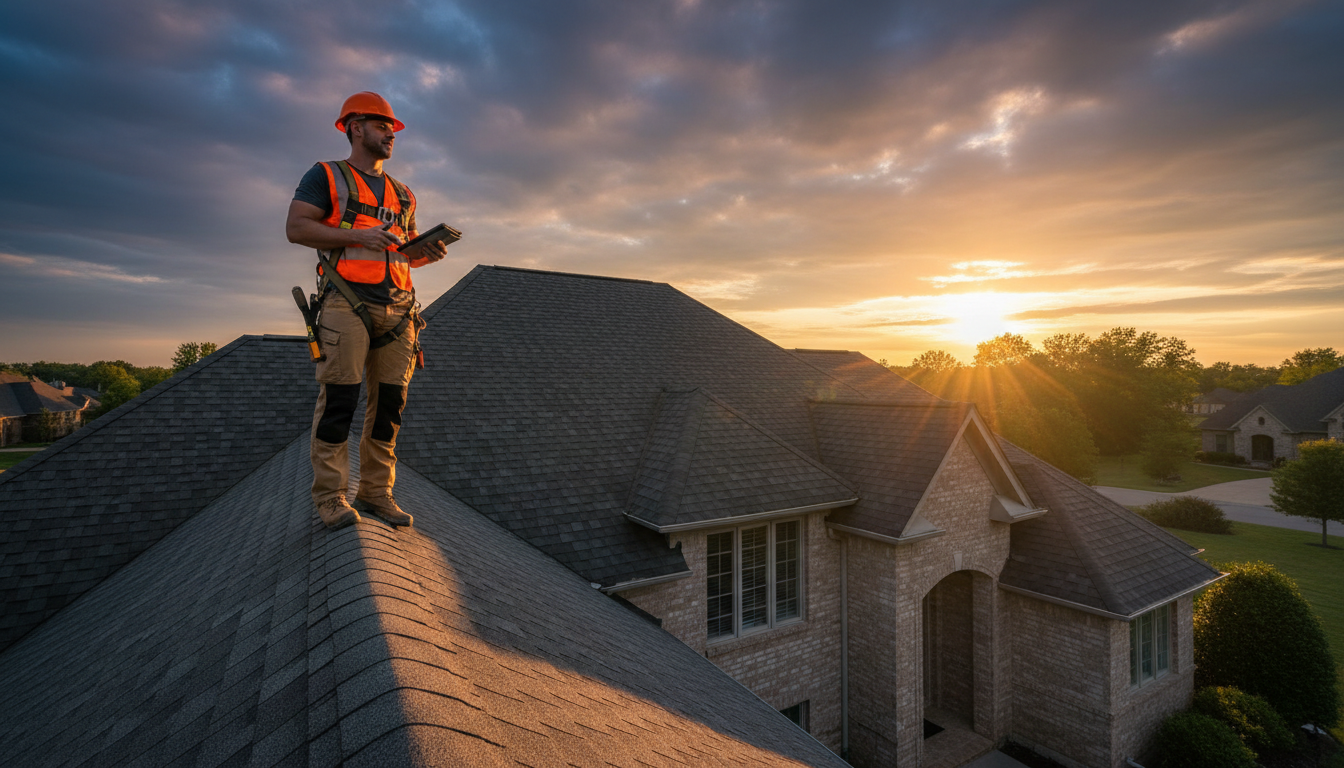
For an OSHA fall protection Florida small business program to be effective, it must move beyond basic awareness. Federal investigators are no longer focusing solely on massive commercial tower cranes. They are driving through neighborhood subdivisions in Viera and Suntree, stopping at single-family residential roofing jobsites to check for basic harness use. The Rockledge case proves that small residential work is firmly on the enforcement radar.
Understanding OSHA Standard 1926 vs 1910: Construction vs General Industry
To properly manage an OSHA fall protection Florida small business program, you must identify which regulatory framework applies to your daily operations. OSHA divides safety standards into two distinct parts: 1910 and 1926.
The application of these standards is determined by the "intent of work" rather than the worker’s official job title. For example, a Melbourne HVAC technician performing routine servicing and filter replacement on a ground-level warehouse unit is clearly under 1910 (General Industry). However, if that same technician climbs onto the roof of a commercial building to install a new condensing unit, the "intent of work" has shifted to construction and alteration, which immediately places them under the stricter 1926 (Construction) standards.
Consider a common scenario for contractors in Brevard County: residential roofing. A team installing metal hurricane clips on a new build or performing a complete roof tear-off is engaged in construction and must follow 1926. But if a maintenance worker is sent out to patch a single shingle on an existing structure, a debate might arise; however, given current enforcement trends, OSHA is likely to view this under the demanding 1926 umbrella if it involves climbing onto a sloped surface.
Feature | General Industry (1910) | Construction (1926) |
|---|---|---|
Fall Protection Trigger | 4 Feet | 6 Feet |
Core Focus | Maintenance, Warehousing, Manufacturing | Construction, Alteration, Major Repair |
Regulatory Reference | 29 CFR 1910 Subpart D | 29 CFR 1926 Subpart M |
Misjudging the "intent of work" is a frequent cause of citations during OSHA compliance audits. If your business fluctuates between service calls and large-scale installations, you should default to the construction standard (1926) whenever employees leave the ground for installation or repair work.
The Hierarchy of Fall Protection: Prevent, Restrain, or Arrest

Selecting the right control method for an OSHA fall protection Florida small business program requires a systematic approach known as the hierarchy of controls. At SEAI Global, we teach our clients to work through this four-tier system — from safest to least desirable — every single day.
When elimination is not feasible, the next priority is prevention through passive systems. Guardrails are the industry standard here. OSHA 1910 and 1926 specify that top rails must be 42 inches high (plus or minus 3 inches) and capable of withstanding 200 pounds of force. Toeboards must be provided to prevent tools from falling onto workers below.
Fall restraint is the third tier. Unlike arrest systems, restraint uses a lanyard of a fixed length to physically prevent a worker from reaching an unprotected edge. It functions much like a leash, ensuring the fall never occurs in the first place. This is often a more manageable solution for flat roof maintenance where guardrails are not present.
Personal Fall Arrest Systems (PFAS) represent the final and least desirable tier in the hierarchy. While PFAS is often the first tool people associate with safety, SEAI Global classifies it as a last resort. Arrest systems allow the worker to fall before the equipment stops the descent. This introduces secondary risks, including swing falls where a worker strikes a lower structure, or suspension trauma while waiting for rescue. Because of these complexities, we focus on risk management solutions that favor prevention. During our workplace safety inspections, we evaluate your site specifically to see if higher-level controls can replace active arrest systems, reducing your overall liability and significantly increasing worker safety.
Personal Fall Arrest Systems (PFAS): Anchor Points and Harnesses
If your risk management solutions dictate the use of Personal Fall Arrest Systems (PFAS), understanding the "ABC" components is critical for survival. A PFAS consists of three interconnected parts: the anchor, the body harness, and the connector. Each component must function in unison to safely stop a worker during a fall and distribute the resulting forces across the body.
Regarding OSHA fall protection anchor point requirements, the anchor must be capable of supporting at least 5,000 pounds per person attached. Alternatively, it must be designed, installed, and used under the supervision of a qualified person as part of a complete PFAS that maintains a safety factor of at least two. For Melbourne contractors, this often requires verifying the structural integrity of residential trusses or commercial steel beams before any hardware is secured.
The connector, typically a shock-absorbing lanyard or self-retracting lifeline (SRL), bridges the gap between the harness and the anchor. In Florida, the environment plays a significant role in equipment longevity. The intense UV radiation and high humidity common in Brevard County can degrade synthetic webbing and cause corrosion on metal D-rings significantly faster than in milder climates. During our workplace safety inspections, we often find harnesses with brittle fibers or sun-faded stitching that no longer meet safety standards. We recommend more frequent OSHA compliance audits and rigorous daily pre-use checks to ensure that your gear has not been compromised by the local environment.
Florida Building Code and Fall Protection Intersections
Compliance with the Florida Building Code (FBC) is a legal necessity for any commercial construction in Melbourne; however, meeting local building codes does not guarantee a compliant OSHA fall protection Florida small business program. The FBC primarily ensures structural resilience against environmental factors like high winds, whereas OSHA focuses on the safety of the individual worker. For instance, a skylight may meet FBC impact requirements for hurricane resistance but still fail OSHA standards if it lacks the specific screens or guardrails necessary to prevent a worker from stepping through it during routine maintenance.
Similarly, permanent roof anchors installed during a renovation might satisfy municipal inspectors for structural stability, but they must still meet the 5,000-pound load capacity and certification requirements mandated by federal law. When planning new builds or facility upgrades on the Space Coast, it is essential to verify that architectural plans satisfy both sets of regulations. These discrepancies are frequently identified during workplace safety inspections. By integrating risk management solutions early in the design phase, you avoid the costly retrofitting that often follows OSHA compliance audits when a code-compliant building is found lacking in personnel safety.
Common Fall Protection Violations and 2026 Fine Increases
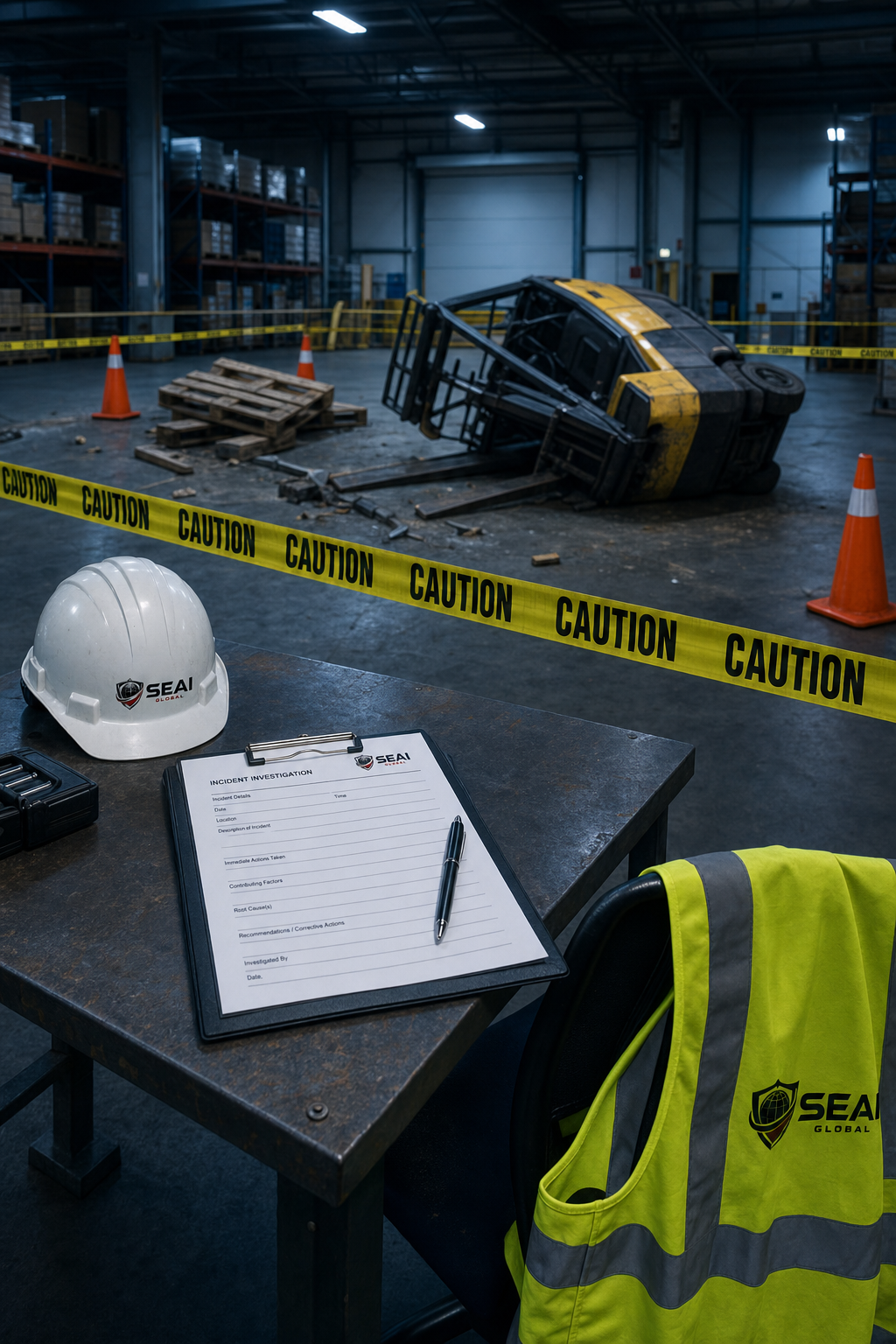
Even when a facility meets the structural requirements of the Florida Building Code, operational safety frequently falls short during daily tasks. Identifying these gaps through regular workplace safety inspections is the only way to avoid the most common citations issued to a typical OSHA fall protection Florida small business. Currently, the most frequent violations involve unprotected sides and edges, followed closely by a failure to provide any fall protection training to employees before they begin work.
Florida has experienced a significant spike in residential roofing enforcement recently. OSHA investigators are increasingly patrolling neighborhoods in Melbourne and across Brevard County, focusing on small teams performing roof replacements or hurricane repairs. Many of these citations involve the improper use of ladders or the total lack of personal fall arrest systems. Beyond the physical risks, the financial burden of non-compliance remains at its highest level in OSHA's history. Notably, 2026 penalty amounts did not increase from 2025 — the fall 2025 federal government shutdown kept the Bureau of Labor Statistics from producing the inflation data OSHA needed to calculate its annual adjustment, so the record 2025 figures simply carried over unchanged.
Violation Category | 2026 Maximum Penalty |
|---|---|
Serious Violations | $16,500 per violation |
Other-Than-Serious | $16,500 per violation |
Willful or Repeated | $165,514 per violation |
Failure to Abate | $16,500 per day |
The financial impact of a single citation can devastate a small firm's annual profit margin. A Serious violation now costs up to $16,550, and for contractors with a history of non-compliance, Willful or repeated violations can reach $165,514 per occurrence. These figures underscore why proactive OSHA compliance audits are a necessary business strategy rather than an optional safeguard.
How to Develop a Written Fall Protection Plan for Your Small Business
Avoiding the staggering fines mentioned above requires more than just buying harnesses; you must document your safety strategy through a site-specific fall protection plan. A common mistake for an OSHA fall protection Florida small business is relying on generic PDF templates downloaded from the internet. OSHA inspectors look for plans that address the unique hazards of a specific job site, such as the exact roof pitch of a Melbourne residential project or the specific floor openings in a commercial renovation.
A compliant plan begins with a thorough hazard identification phase. Use workplace safety inspections to map out every edge, hole, and fragile surface. Once hazards are identified, your plan must specify the equipment used to mitigate them. If your risk management solutions include personal fall arrest systems, the document must also outline a detailed rescue plan. It is not enough to say “call 911.” You must demonstrate a method for retrieving a suspended worker within minutes to prevent suspension trauma.
Every plan should also include a section on safety training to ensure employees understand the specific gear and procedures for that location. At SEAI Global, we help firms move beyond boilerplate documents by creating customized plans that stand up to OSHA compliance audits and, most importantly, protect your workforce on the Space Coast.
Fall Protection Training Requirements for Florida Workers
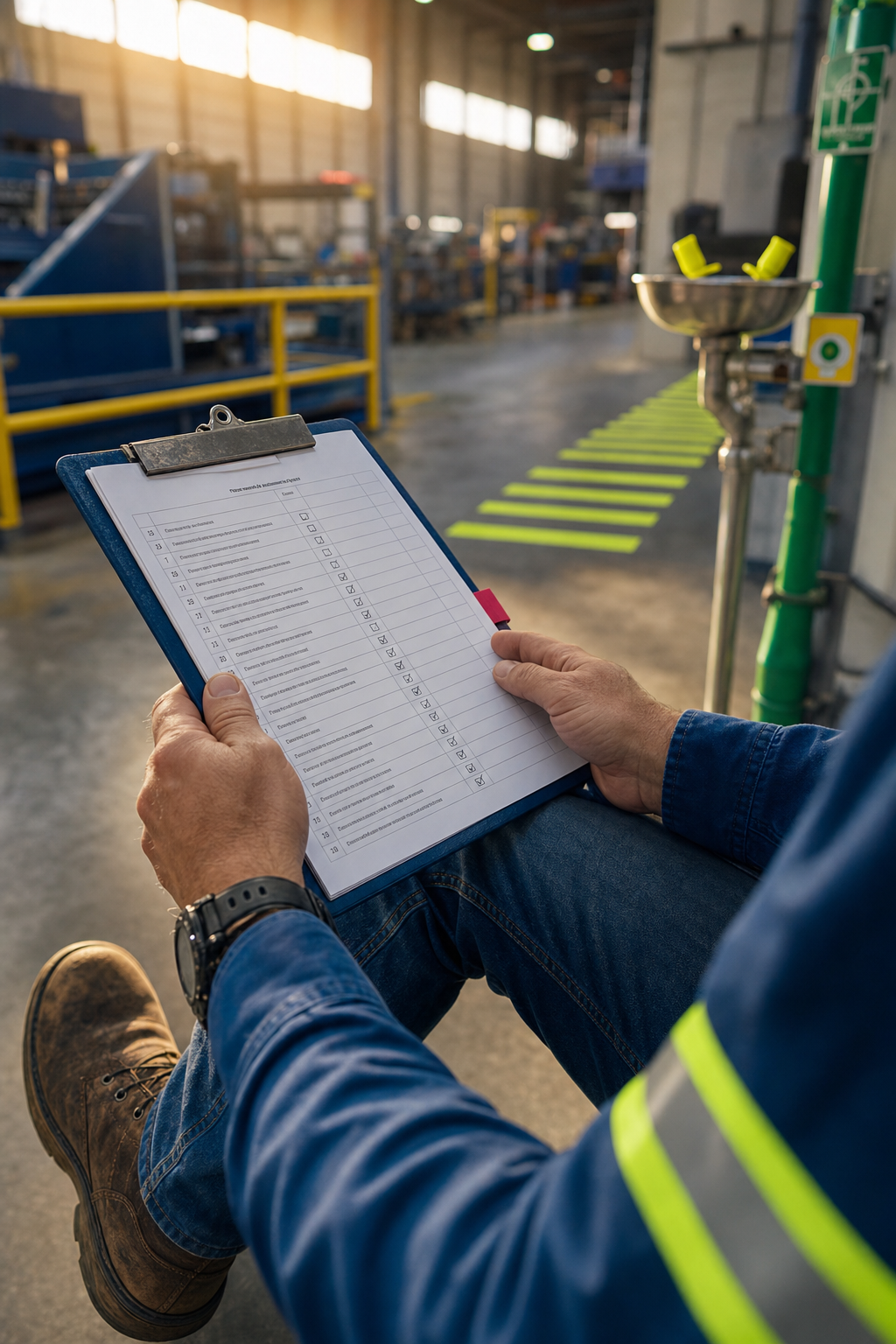
A written plan is only as effective as the personnel implementing it. Every employee exposed to fall hazards must receive comprehensive instruction before they encounter the risk. This is a non-negotiable prerequisite for an OSHA fall protection Florida small business; OSHA mandates that training must occur before any potential exposure.
Florida’s diverse workforce requires that instruction be delivered in a language and vocabulary the employee truly understands. If a crew is primarily Spanish-speaking, a session conducted only in English will not satisfy federal requirements. Training is also not a one-time event. Retraining is mandatory whenever site conditions change, new equipment is introduced, or a worker demonstrates a lack of proficiency during daily operations.
There is a significant difference between generic online videos and the hands-on instruction needed for Space Coast job sites. While digital modules provide basic theory, they cannot teach a worker how to identify heat-degraded stitching or how to calculate swing fall distances on a specific Melbourne rooftop. Robust safety training must be led by a competent person who provides practical, site-specific demonstrations. This expert-led approach ensures that the gaps often identified during workplace safety inspections are closed before they trigger OSHA compliance audits. By prioritizing hands-on competency over check-the-box videos, your firm secures the most effective risk management solutions for its most valuable asset: its people.