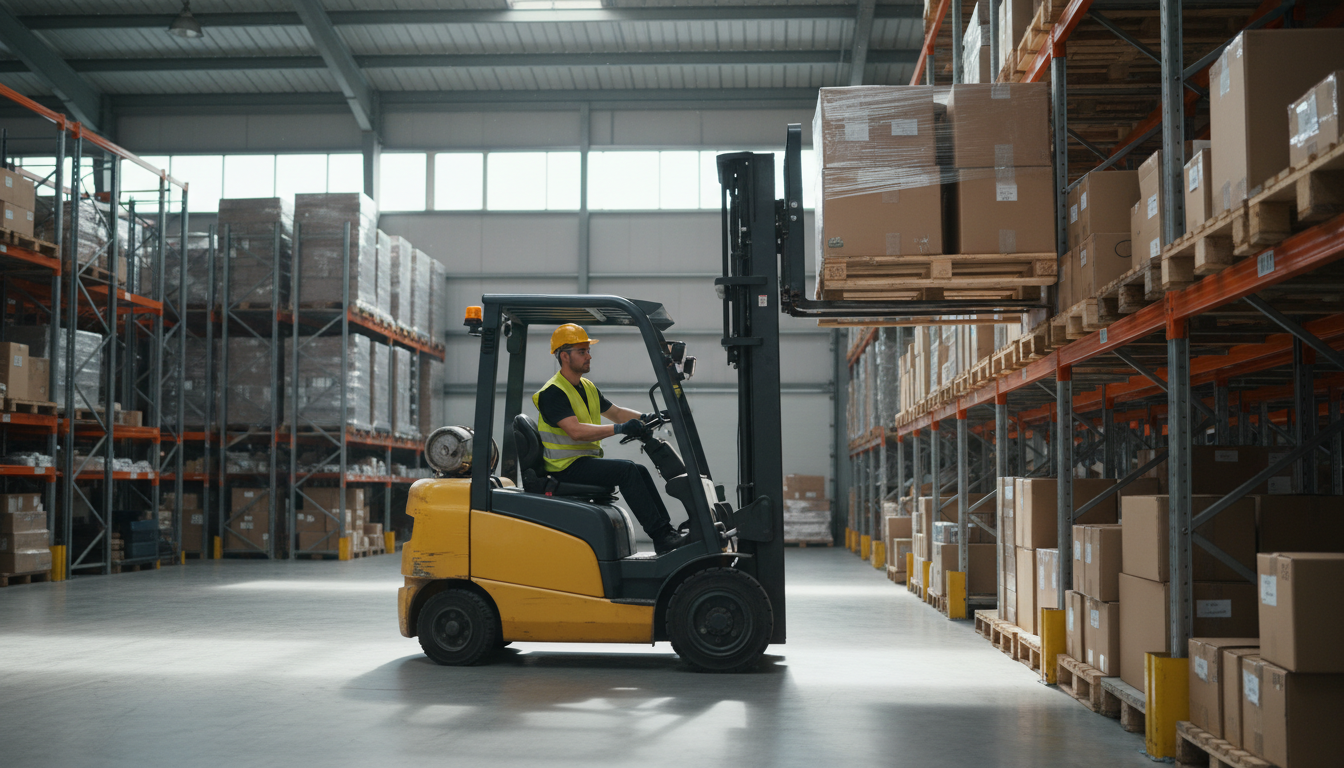
OSHA forklift safety requirements Florida small business owners must follow include ensuring all operators are at least 18 years old and fully certified through formal training and practical evaluations. Employers are responsible for documenting these certifications and mandating performance reviews or recertification every three years to maintain compliance with federal standards.
Navigating OSHA regulations often feels like a full-time job for Florida small business owners, especially with the 2026 updates looming. A single oversight in powered industrial truck compliance can lead to six-figure fines or, worse, a preventable workplace injury. In Florida, unique environmental factors like high humidity and intense heat accelerate equipment wear, making strict adherence to Standard 1910.178 more than just a legal hurdle; it is a critical component of operational longevity. Managing these risks requires a sophisticated understanding of both federal mandates and local operational challenges. This guide breaks down the essential pillars of forklift certification, outlines daily inspection protocols tailored for the Florida climate, and clarifies the specific refresher training triggers you must monitor to remain compliant through 2026. We will also explore the severe financial implications of non-compliance to help you protect your bottom line.
Understanding OSHA Standard 1910.178 for Powered Industrial Trucks
OSHA Standard 1910.178, titled Powered Industrial Trucks, serves as the regulatory framework for safe material handling across all industries. This standard is frequently misunderstood as applying only to high capacity, sit down forklifts. In practice, it covers an extensive range of equipment categorized into seven distinct classes, including motorized pallet jacks, order pickers, and reach trucks. Each class has specific operational nuances that require unique safety protocols.
The federal regulations mandated by 1910.178 apply to every Florida employer, regardless of headcount or industry sector. For those navigating OSHA forklift safety requirements Florida small business owners must recognize that even a single piece of equipment, such as an electric walkie pallet jack, triggers the need for full compliance. Ignoring these mandates poses a significant risk to both personnel and the operational continuity of the firm.
The urgency of maintaining rigorous standards is supported by NIOSH data, which indicates that approximately 85 workers are killed and 34,900 are seriously injured in forklift related incidents annually. These fatalities are often the result of turnovers, struck by accidents, or falls from elevated platforms. Implementing consistent workplace safety inspections and regular OSHA compliance audits is essential for identifying site specific hazards. Ensuring your team receives comprehensive forklift safety training is not just a regulatory hurdle; it is a critical strategy for preventing life altering workplace accidents.
The Three Pillars of OSHA Forklift Training and Certification
A common misconception among business owners is that OSHA issues forklift licenses or certifications directly. In reality, OSHA mandates that the employer is the certifying authority. It is your responsibility to ensure that every operator is competent to operate a powered industrial truck safely, as demonstrated by their successful completion of a training program that meets specific regulatory criteria.
To meet OSHA forklift safety requirements Florida small business operations must follow a three part training structure. The first pillar is formal instruction. This includes a combination of lectures, interactive computer learning, videos, and written materials. This phase establishes the theoretical foundation, covering concepts like the stability triangle, load capacity, and instrumentation.
The second pillar is practical training. This involves hands-on demonstrations performed by a qualified trainer followed by supervised exercises performed by the trainee. It is not enough for an employee to watch a video; they must physically operate the specific class of equipment they will use on the job. At SEAI Global, we emphasize that this stage is where muscle memory and safety habits are formed under expert supervision.
The third and most critical pillar is the evaluation of the operator's performance in the workplace. An evaluator must observe the employee performing actual work tasks in the environment where they will be stationed. This ensures the operator can navigate your specific facility layout, such as narrow aisles, loading docks, or pedestrian zones.
Compliance cannot be achieved through a one size fits all approach. Training must be both equipment specific and site specific. For example, an operator certified on a sit down electric forklift is not automatically qualified to operate a stand up reach truck. Similarly, a certification earned at a previous place of employment does not exempt an employer from conducting a site specific evaluation at the new facility. Integrating these pillars into your forklift safety training program, supported by regular workplace safety inspections and OSHA compliance audits, ensures your documentation is defensible and your team is protected.
Who Can Operate a Forklift: Age and Ability Standards
Building on the training pillars, identifying who is legally eligible to step into the driver’s seat is the next critical step for management. Federal law is unequivocal: no individual under the age of 18 is permitted to operate a powered industrial truck in a non-agricultural setting. When navigating OSHA forklift safety requirements Florida small business owners must strictly enforce this age limit to avoid severe child labor violations alongside standard safety citations.
Beyond the age threshold, an operator’s ability is measured through demonstrated proficiency in several core technical skills. Before being authorized to move inventory, an operator must prove they can perform the following tasks:
Conducting thorough pre-shift inspections to identify mechanical or hydraulic failures.
Mastering steering and maneuvering, specifically accounting for the unique rear-end swing of the chassis.
Maintaining load stability by properly managing the stability triangle and the vehicle's center of gravity.
Executing safe loading, stacking, and unstacking procedures on various surface types.
Proving these abilities during forklift safety training ensures that the operator is not just a driver, but a safety-conscious professional. Integrating these standards into your regular workplace safety inspections further validates that only qualified personnel are handling your equipment.
Florida Specific Challenges: Heat, Humidity, and Outdoor Operations
Operating a forklift in the Sunshine State introduces environmental variables that standard training manuals often overlook. When addressing OSHA forklift safety requirements Florida small business owners must account for extreme heat and humidity, which impact both mechanical integrity and operator health. In our local Melbourne area, the proximity to the coast means salt air accelerates the corrosion of lift chains, hydraulic fittings, and electrical connections. This environmental factor makes workplace safety inspections vital for identifying structural weaknesses or surface pitting before a failure occurs.
Battery maintenance is particularly hazardous in Florida's high humidity. During the charging process, lead-acid batteries release hydrogen gas. In humid, stagnant air, moisture can interfere with the efficiency of standard ventilation systems, potentially creating pockets of combustible gas. Employers must ensure charging stations are located in areas with high-volume airflow or specialized humidity controls to mitigate fire risks and ensure compliance with 29 CFR 1910.178(g).
For businesses using internal combustion forklifts in semi-enclosed warehouses, the combination of engine heat and ambient Florida temperatures creates a high risk for heat stress. Carbon monoxide levels can also accumulate more rapidly in heavy, humid air if cross-ventilation is poor. Proactive OSHA compliance audits can help identify these invisible atmospheric hazards. Protecting your team requires an operational strategy that accounts for the physical toll of the climate. Integrating heat illness prevention and specific moisture-related maintenance into your forklift safety training ensures operators recognize the signs of both equipment fatigue and personal exhaustion before an accident happens on the warehouse floor.
Daily Forklift Inspection Requirements and Safety Checklists

Catching the environmental wear and corrosion mentioned previously requires a disciplined approach to the daily inspection mandate. Under 29 CFR 1910.178(q)(7), every powered industrial truck must be examined before being placed in service. For most operations, this means a thorough inspection at the start of each day. However, if your facility operates around the clock, OSHA mandates that the forklift be inspected after every shift change. This ensures that any mechanical issues or wear caused by the previous operator are identified before the next person takes over.
A comprehensive inspection covers both visual and operational components. Operators should utilize a checklist that includes:
Tires and wheels (checking for chunks, cracks, or embedded debris)
Lights and alarms (including back-up signals and beacons)
Horn functionality
Service and parking brakes
Lift mechanism (inspecting the mast, chains, and forks for hydraulic leaks or distortion)
Fluid levels (oil, water, and hydraulic fluid)
While OSHA does not explicitly require businesses to archive completed inspection logs for several years, maintaining written records is a critical best practice. For an OSHA forklift safety requirements Florida small business owner, these logs serve as prime evidence of due diligence. In the event of an accident, having a documented history of consistent workplace safety inspections provides a necessary defense against claims of negligence or liability. This documentation proves that the equipment was safe at the start of the shift and that the employer is meeting its federal obligations.
Refresher Training Triggers and the 2026 Compliance Outlook
Compliance is not a one-time event; it is a continuous cycle of verification. Under OSHA mandates, every operator must undergo a performance evaluation at least once every three years to ensure they still possess the skills required for safe operation. For management maintaining OSHA forklift safety requirements Florida small business owners must understand that this three year window is the maximum interval. Specific events, known as refresher training triggers, necessitate immediate intervention regardless of when the last certification occurred.
Refresher training is legally required if any of the following occur: - An operator is involved in an accident or a "near-miss" incident. - An operator is observed operating the vehicle in an unsafe manner. - An evaluation reveals that the operator is not operating the truck safely. - The operator is assigned to drive a different type of truck, such as moving from a sit down model to a stand up reach. - Conditions in the workplace change in a way that could affect safe operation, such as new racking configurations or floor surface alterations.
Looking toward 2026, the industry is shifting toward data-driven oversight. Telematics and behavioral monitoring systems are becoming standard in modern fleets. These tools track rapid acceleration, hard braking, and impacts in real-time. Integrating these technologies into your OSHA compliance audits allows for proactive forklift safety training by identifying risky patterns before they result in a citation or injury. Staying ahead of these tech trends ensures your workplace safety inspections remain effective in an increasingly automated environment.
The High Cost of Non-Compliance for Small Employers
The financial fallout of a forklift related incident can be catastrophic for an organization with limited capital reserves. As of 2024, OSHA civil penalties for serious violations can exceed $16,000 per individual citation. If an inspector identifies multiple infractions during a single visit, such as a lack of training records combined with faulty equipment, the cumulative fines can easily reach six figures. For those navigating OSHA forklift safety requirements Florida small business owners often find that these penalties are just the beginning of the financial drain.
A single tip over or pedestrian strike often triggers a cascade of business killing expenses. This includes immediate medical costs, a permanent spike in workers' compensation experience mod ratings, and the high price of private litigation. In Florida’s litigious environment, a personal injury claim can quickly exceed the limits of a standard liability policy. SEAI Global acts as a vital safeguard against these outcomes by conducting professional OSHA compliance audits that identify gaps before they become liabilities. By implementing rigorous workplace safety inspections and standardized forklift safety training, Melbourne firms can protect their personnel while ensuring an accident does not become a bankruptcy event. Prevention through expert oversight is the only sustainable strategy for long term operational survival.