
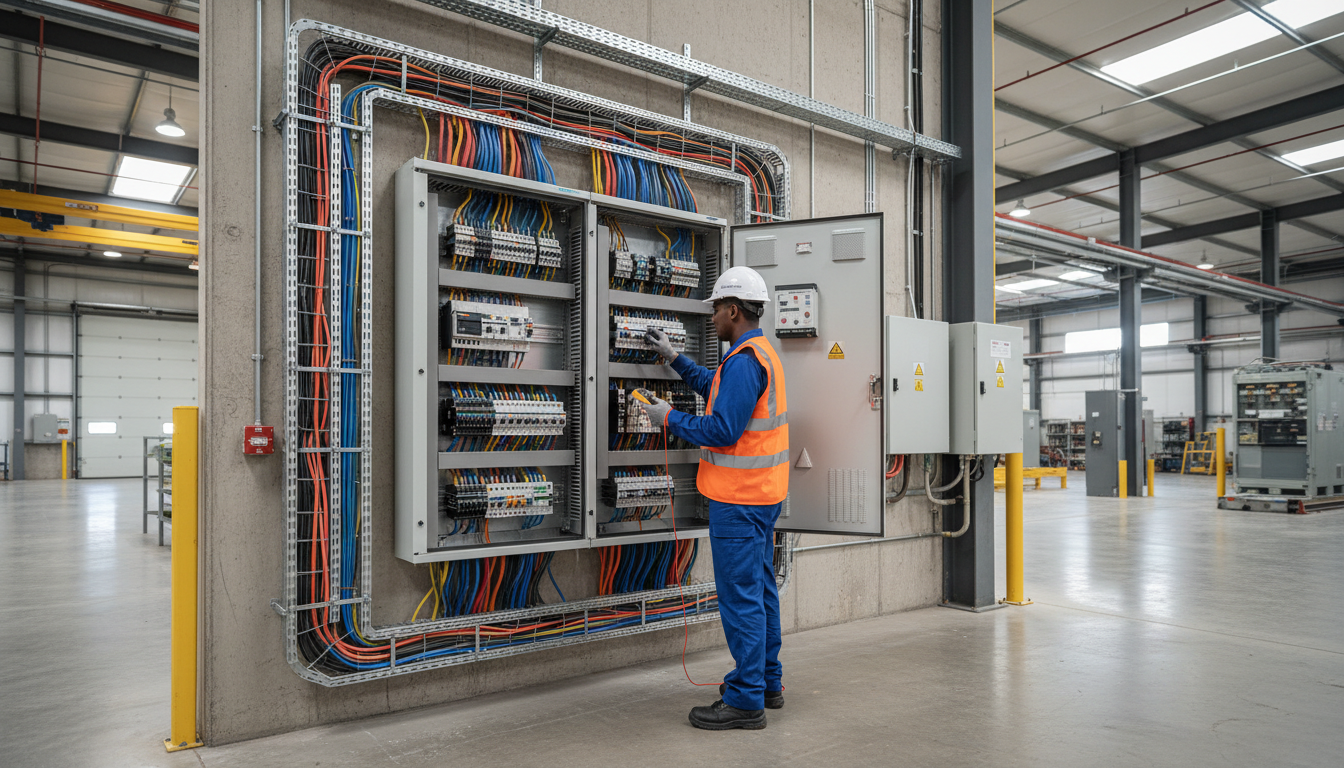
Achieving OSHA lockout tagout Florida small business compliance requires establishing a written energy control program that includes specific machinery shutdown procedures, employee training for authorized and affected roles, and annual inspections. Companies must utilize standardized lockout devices to ensure a zero energy state during maintenance; failure to follow these protocols remains one of the most common causes of federal citations. These steps ensure worker safety by preventing the accidental release of hazardous energy during equipment repairs.
Navigating the complexities of OSHA 1910.147 often feels like a regulatory minefield for Florida small business owners. A single oversight during routine equipment maintenance can result in life-altering injuries or devastating financial penalties that jeopardize your company's future. Compliance is not merely a legal checkbox; it is a critical investment in your operational stability and the physical safety of your workforce. As we approach 2026, the demand for precision in energy control has never been higher for local manufacturers and healthcare facilities alike. This guide offers an expert breakdown of the essential LOTO requirements tailored for the Florida market. You will learn to develop a defensible written program, master the seven-step isolation process, and maintain the rigorous documentation necessary for both OSHA and Joint Commission standards.
Why OSHA 1910.147 Is a Top Priority for Florida Employers in 2026
OSHA 1910.147, the Control of Hazardous Energy, consistently ranks among the top ten most frequently cited standards across the United States. For companies operating along Florida’s Space Coast, maintaining OSHA lockout/tagout Florida small business compliance is a vital necessity for protecting both workers and the bottom line. In Melbourne’s growing manufacturing and healthcare sectors, the complexity of modern machinery means that the margin for error is razor-thin.
For a smaller enterprise, a single LOTO-related incident can lead to devastating consequences, including heavy fines, increased workers' compensation premiums, and potential litigation. Compliance requires understanding that hazardous energy extends far beyond basic electricity. A robust program must account for mechanical movement, hydraulic pressure, pneumatic force, chemical reactions, and thermal energy sources that can cause unexpected startup or release of stored energy during maintenance.
Proactive workplace safety inspections and thorough OSHA compliance audits are essential tools for identifying these diverse energy risks. By implementing specialized safety training, local employers can move beyond simple 'off' switches and ensure their teams are equipped to handle the multifaceted energy systems found in modern Florida facilities.
The Foundation: Developing a Written Energy Control Program
Achieving OSHA lockout tagout Florida small business compliance requires more than just keeping a safety binder on a shelf. Many Melbourne business owners mistakenly believe a template downloaded from the internet fulfills their regulatory obligations, but a generic policy will almost certainly fail an OSHA inspection. The 1910.147 standard explicitly mandates machine-specific procedures that reflect the unique mechanical and energy profiles of your specific equipment.
A compliant written program must serve as a functional roadmap for your team. It must clearly define the scope, purpose, and authorization levels within your facility. Beyond administrative boilerplate, the document must detail the specific rules and techniques to be used for the control of hazardous energy for every individual piece of equipment that requires servicing. This includes identifying every energy isolating device, from main electrical disconnects to specific pneumatic bleed valves.
At SEAI Global LLC, we frequently encounter 'copy-paste' programs during our OSHA compliance audits that have been lifted directly from unrelated industries. These programs often fail because they do not reflect the actual machinery on the shop floor. For example, a program written for a standard warehouse will not provide the necessary safety protocols for a Space Coast manufacturing facility using high-pressure hydraulic presses or complex chemical processing lines. Without these machine-specific instructions, employees are left to guess how to achieve a safe state, which significantly increases the risk of a catastrophic accident and substantial regulatory fines.
The Seven Step LOTO Process for Florida Businesses
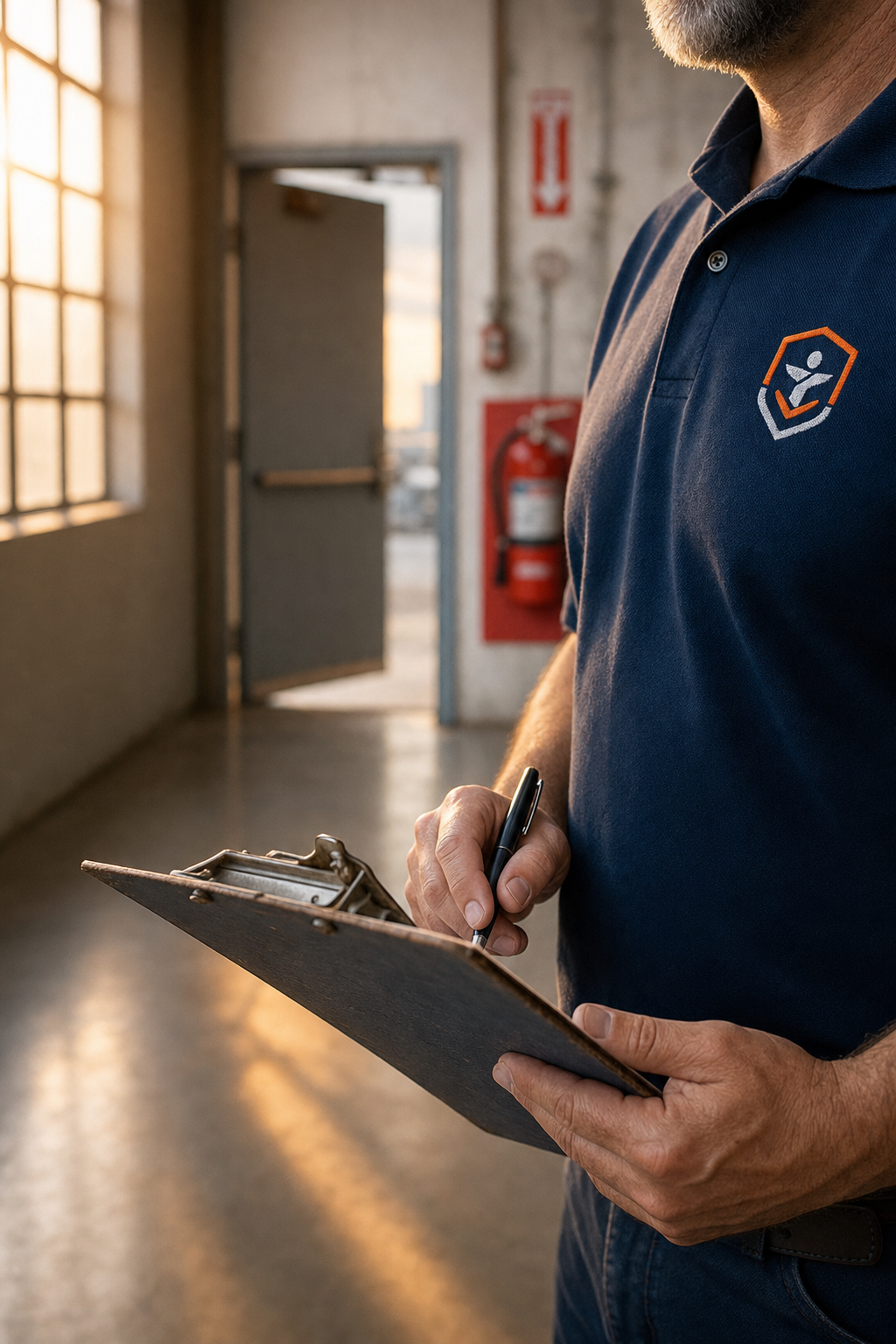
Once machine-specific procedures are drafted, they must be implemented through a systematic, seven-step sequence. This structured approach ensures that no energy source is overlooked during maintenance or servicing. In our experience performing workplace safety inspections across the Space Coast, we find that skipping even one of these steps can lead to a near-miss or a recordable injury.
Preparation: The authorized employee must investigate and identify all types of hazardous energy present. This includes surveying the equipment for secondary power sources or backup systems often found in the specialized manufacturing facilities of Melbourne and Palm Bay.
Shutdown: The equipment must be turned off using the normal operating controls. An orderly shutdown is necessary to avoid creating additional hazards to personnel or causing mechanical damage to the machine components.
Isolation: All energy isolating devices, such as electrical breakers, disconnect switches, or line valves, must be physically operated to isolate the machine from its energy sources. Turning off a wall switch or an HMI screen is not isolation; it must be a physical disconnect.
Application of LOTO Devices: A standardized lock and tag must be applied to each energy isolating device. This ensures the device cannot be moved from the safe or off position. Each authorized employee must use their own individual lock to maintain personal control.
Stored Energy Control: All residual or stored energy must be rendered safe. This involves bleeding pneumatic lines, relieving hydraulic pressure, discharging electrical capacitors, or using blocks to secure elevated parts that could fall due to gravity.
Verification: Known as the "Try" step, this is the most critical phase of OSHA lockout tagout Florida small business compliance. The employee must attempt to start the machine using normal controls to verify that isolation was successful. Verification is where most compliance failures occur; workers often assume a lock on a single breaker has de-energized the entire system without actually testing the circuit.
Restoring the Machine: After work is complete, the area must be cleared of tools, guards must be replaced, and all affected employees must be notified before the locks are removed and the machine is safely restarted.
To ensure these steps are mastered by your team, SEAI Global LLC offers specialized safety training that focuses on the practical application of these steps in a real-world shop environment. Establishing this routine is the only way to move from theoretical compliance to a truly safe workplace.
Differentiating Authorized and Affected Employees
Transitioning from the technical steps to personnel roles is critical for maintaining OSHA lockout/tagout Florida small business compliance. OSHA defines two distinct roles: Authorized and Affected employees. Authorized employees are the specialists who physically apply the locks and tags to perform maintenance or servicing. Conversely, Affected employees are those who operate the machinery or work in the immediate vicinity where LOTO is being applied.
Training mandates differ drastically between these groups. Authorized staff require specialized safety training regarding the recognition of hazardous energy sources, the specific types and magnitudes of energy present in the facility, and the exact methods required for isolation. Affected employees must be instructed on the purpose of the energy control procedure, specifically the absolute prohibition against restarting or re-energizing locked-out equipment.
In many small manufacturing facilities across Melbourne and the Space Coast, personnel often perform multiple duties. An employee might operate a CNC machine in the morning and perform its mechanical maintenance in the afternoon. In these instances, the worker must receive the full scope of Authorized training. This ensures they are fully qualified to manage energy risks whenever they transition from operator to technician.
Stored Energy and the Zero Energy State
Achieving true OSHA lockout tagout Florida small business compliance requires recognizing that off is not synonymous with safe. Even after a machine is disconnected from its primary power source, residual energy often remains trapped within the system, posing a significant risk for unexpected movement. In the Melbourne area, manufacturing facilities frequently utilize complex pneumatic systems that require precise bleeding procedures to reach a true zero energy state. Simply closing a valve may leave compressed air in the lines that could cycle an actuator if triggered.
Beyond pneumatics, your team must address hydraulic fluid under high pressure, tensioned mechanical springs, and elevated machine parts that rely on gravity. During workplace safety inspections, SEAI Global LLC professionals look for specific methods to dissipate these hazards, such as using safety blocks or discharging capacitors for electrical systems. Identifying these hidden energy sources is a critical component of thorough OSHA compliance audits. Failing to reach a verified zero energy state leaves your workforce vulnerable to sudden releases of force that standard locks alone cannot prevent.
Mandatory Annual Inspections and Program Certification
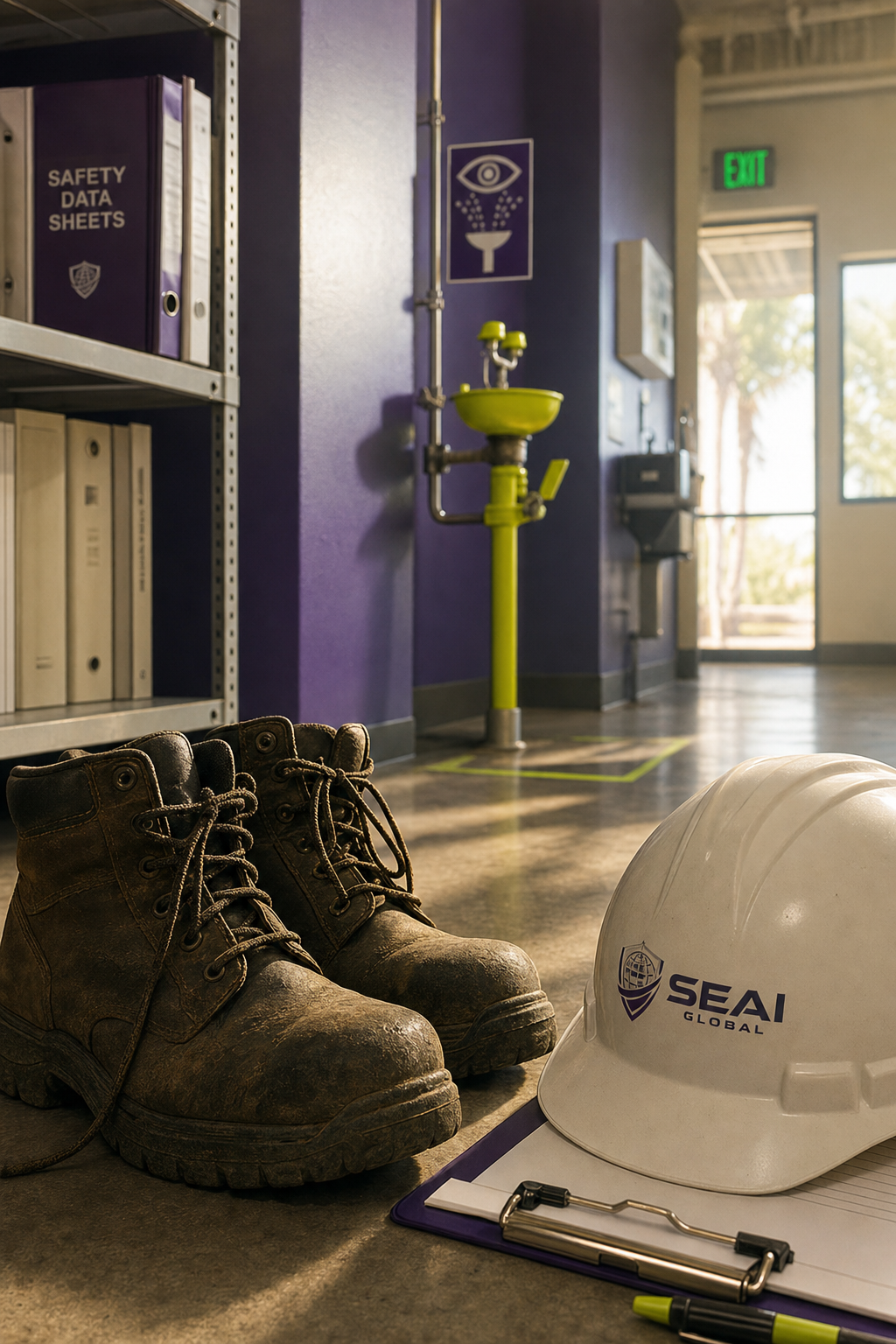
Even the most meticulously engineered energy control program degrades over time without regular oversight. To maintain OSHA lockout tagout Florida small business compliance, the 1910.147 standard requires a formal periodic inspection of energy control procedures at least once every twelve months. This is not a casual walkthrough; it is a structured audit designed to identify and correct any deviations or inadequacies in your current safety protocols.
OSHA is specific about who can perform these reviews. The inspection must be conducted by an authorized employee other than the one(s) currently utilizing the energy control procedure being inspected. This separation ensures an objective perspective and prevents the complacency that often leads to shortcuts on the shop floor. The inspector must verify that the machine-specific procedures are being followed correctly and that all authorized employees possess a functional understanding of their responsibilities.
Documentation is the final hurdle of this requirement. You must certify that the inspections have been performed by recording the date, the machinery involved, the employees included in the review, and the inspector's name. SEAI Global LLC assists Melbourne businesses by providing these certifications through our workplace safety inspections. By utilizing our team for OSHA compliance audits, you gain the third-party objectivity necessary to ensure your program remains robust under regulatory scrutiny while reinforcing the specialized safety training your team has already received.
LOTO Requirements for Florida Healthcare and Joint Commission Standards
Healthcare facilities in Melbourne and throughout Brevard County face a dual layer of regulatory scrutiny. While OSHA 1910.147 provides the legal baseline, the Joint Commission reinforces these requirements through the Physical Environment standards. Specifically, PE. 04.01.01 mandates that hospitals manage risks associated with their utility systems, a requirement that directly mirrors the objectives of OSHA lockout tagout Florida small business compliance. In a clinical setting, energy control extends beyond the mechanical room; it involves life safety systems where an unexpected startup or energy release could compromise patient care or sterile environments.
Maintenance teams must manage complex energy profiles in medical gas systems, where pressurized oxygen presents both a pneumatic and a significant chemical hazard. Backup generators, which are essential for the hurricane readiness of Florida facilities, require rigorous isolation procedures during load testing or repair to prevent dangerous backfeeding. Additionally, large-scale HVAC units responsible for maintaining negative pressure rooms must be serviced without endangering the technicians or the clinical staff working nearby.
SEAI Global LLC integrates these Joint Commission requirements into our OSHA compliance audits. We provide workplace safety inspections that account for the unique transition of roles where the affected employees are often medical professionals rather than machine operators. Through specialized safety training, we ensure that facility managers can maintain their accreditation while protecting the specialists who keep these critical healthcare systems running.
Ensuring your Florida small business meets the 2026 LOTO standards is essential for worker safety and regulatory peace of mind. While these procedures can be daunting, consistent documentation and proper training form the foundation of a secure workplace. If you find the requirements complex or simply want an expert second set of eyes on your safety protocols, our team is ready to assist. We can help you identify potential gaps through comprehensive OSHA Compliance Audits to ensure your facility remains fully protected.