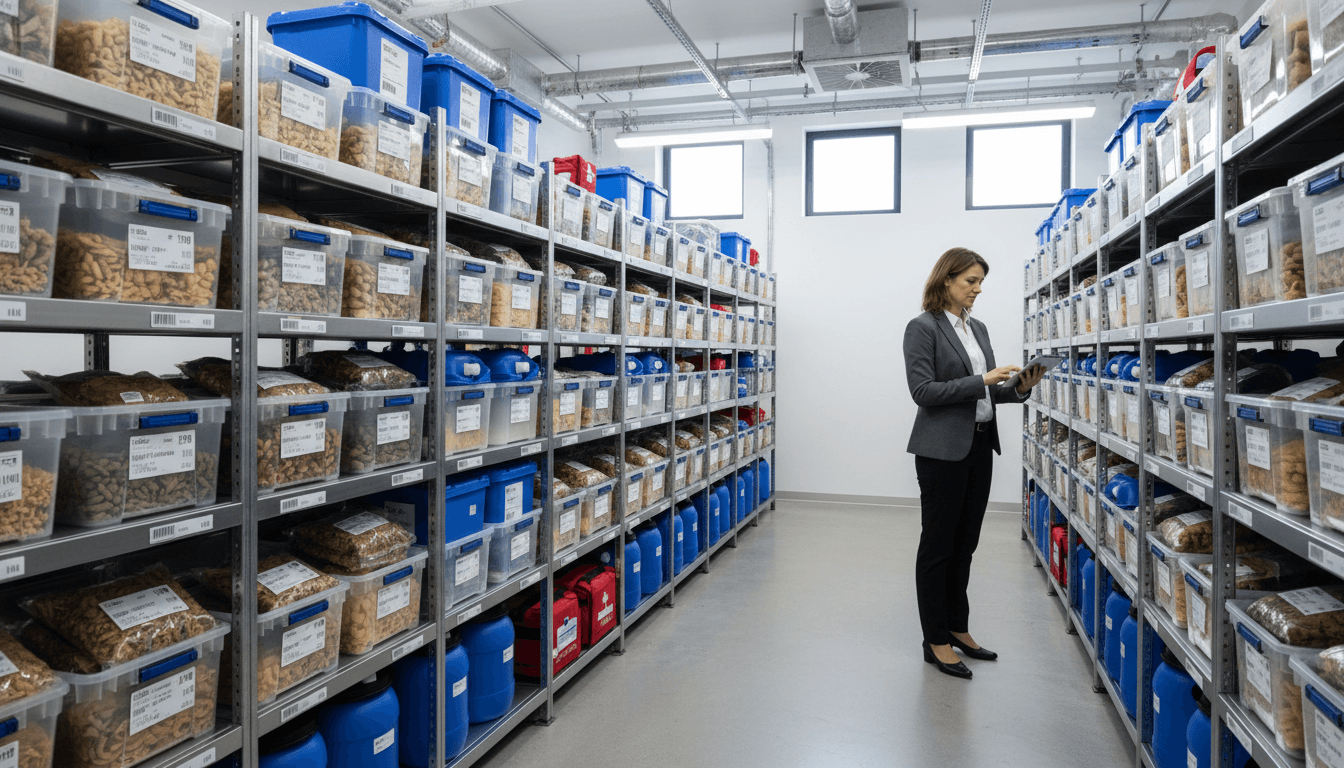

The OSHA inspection process Florida small business owners follow consists of an opening conference, a site walkaround to identify hazards, and a comprehensive review of safety programs and training records. These evaluations are often triggered by workplace accidents or employee complaints, and businesses must respond in writing within five working days to address any identified compliance issues.
For a Florida small business owner, the sudden arrival of an OSHA compliance officer can trigger immediate operational anxiety. This pressure is compounded by Florida's unique regulatory climate, where a single oversight can lead to significant fines that threaten both your reputation and your bottom line. Understanding the inspection process is not merely about avoiding penalties; it is about protecting your most valuable asset, which is your workforce. This guide provides a strategic roadmap through the complexities of a 2026 OSHA visit. We will analyze the six priority levels that trigger inspections, dissect the four critical stages of a site walkthrough, and examine your legal rights regarding consent. By the end of this article, you will possess the practical knowledge required to manage document reviews, navigate employee interviews, and respond effectively to citations during an informal conference.
Understanding the OSHA Landscape for Florida Employers
Florida operates as a federal OSHA state, meaning there is no state-level agency governing private-sector workplace safety. Instead, the Occupational Safety and Health Administration (Federal OSHA) has direct jurisdiction over every private employer in the state. From our headquarters in Melbourne to the industrial hubs of Tampa and Jacksonville, the standards remain uniform, and the enforcement remains federal. For a business owner, this clarifies the regulatory map; you are answering to the U.S. Department of Labor, not a state satellite office.
The arrival of a compliance officer can be an intimidating event for any management team. However, the OSHA inspection process Florida small business owners encounter is highly structured. Understanding this structure is your most effective defense against the uncertainty that leads to costly citations. At SEAI Global, we emphasize that federal inspectors are not looking for perfection, but for compliance with specific safety benchmarks.
Navigating this landscape successfully requires moving from a reactive mindset to a proactive one. Proactive measures, such as workplace safety inspections and comprehensive OSHA compliance audits, ensure that your facility is prepared before an officer ever presents their credentials. By identifying hazards and refining your safety programs now, you remove the element of surprise that often characterizes these federal visits.
What Triggers an OSHA Inspection: The 6 Priority Levels
Navigating the OSHA inspection process Florida small business owners face begins with knowing how the agency prioritizes its site visits. OSHA does not select inspection sites at random; instead, it utilizes a tiered hierarchy to allocate limited resources, focusing on the most hazardous environments first. These triggers are divided into unprogrammed inspections, which are reactive responses to specific events, and programmed inspections, which are proactive, scheduled visits based on industry data.
The six priority levels for OSHA enforcement are:
Imminent Danger: This is the highest priority, involving conditions where there is reasonable certainty that a danger exists that could cause death or serious physical harm immediately. If an inspector identifies an imminent danger, they will ask the employer to correct the condition or remove endangered employees right away.
Fatalities and Catastrophes: Any work-related fatality must be reported by Florida employers within 8 hours. Inpatient hospitalizations, amputations, or the loss of an eye must be reported within 24 hours. Failure to meet these deadlines often triggers immediate on-site accident investigation services.
Employee Complaints: Workers have a legal right to request an inspection if they believe a violation of a safety standard exists or if there is an active threat of physical harm. OSHA evaluates these complaints to determine if an inspection is warranted.
Referrals: Hazards reported by other government agencies, local fire departments, or even news media reports can lead to an inspection. For example, a local building inspector in Brevard County might refer a site to OSHA if they spot a significant fall hazard.
Programmed Inspections: These are proactive audits targeted at high risk industries. In Florida, construction sites and manufacturing facilities are frequently selected based on their North American Industry Classification System (NAICS) codes and historical injury rates.
Follow-up Inspections: These verify that a previously cited employer has corrected identified hazards within the agreed-upon timeframe.
Maintaining regular OSHA compliance audits is the most effective way to ensure that, regardless of the trigger, your facility remains prepared for a federal compliance officer's arrival. By addressing potential issues through internal workplace safety inspections before a trigger occurs, you reduce the likelihood of costly penalties during these high-priority visits.
The Four Stages of an OSHA Inspection Walkthrough

Once a priority trigger leads an inspector to your facility, the physical OSHA inspection process Florida small business owners experience follows a specific, four-stage protocol. This sequence is designed to ensure the inspection is conducted fairly and that the scope remains focused on the original reason for the visit.
### Stage 1: Presentation of Credentials Every inspection begins with the Compliance Safety and Health Officer (CSHO) presenting their official U.S. Department of Labor credentials. These include a photograph and a unique serial number. It is vital to verify these credentials before allowing the inspector past the reception area. If you are uncertain about the individual's identity, you should contact the Jacksonville or Tampa Area Office to confirm the officer's status. Legitimate CSHOs will not object to this verification step; it is a standard security measure for any professional operation.
### Stage 2: The Opening Conference. In this initial meeting, the CSHO explains why your business was selected and defines the scope of the inspection. They will clarify if they are there for a comprehensive wall to wall audit or a limited investigation based on a specific complaint or referral. This is the time to gather your management team and your safety consultant. Establishing a professional tone here is essential, as the CSHO will outline the procedures they intend to follow and the documents they will need to review later.
### Stage 3: The Walkaround. The walkaround is the core of the physical visit. The CSHO will tour the workplace to identify potential hazards and observe employee work practices. During this phase, the inspector will likely take photographs, record videos, and take instrument readings for noise or air quality. We strongly advise employers to adopt a "mirroring" strategy. Assign a staff member to follow the inspector, taking the exact same photos from the same angles and recording detailed notes on everything the CSHO discusses. If an inspector identifies a minor hazard that can be corrected on the spot, you should fix it immediately. While this may not prevent a citation, it demonstrates a proactive safety culture and good faith compliance.
### Stage 4: The Closing Conference. After completing the tour and preliminary interviews, the CSHO will meet with management to discuss their findings. They will describe the apparent violations discovered and the standards that may apply. It is important to remember that the CSHO does not issue citations or set penalty amounts during this meeting; those decisions are made later by the Area Director. This conference is your opportunity to provide additional context or documentation that may address the inspector's concerns before their report is finalized. Maintaining organized OSHA compliance audits and records of previous workplace safety inspections provides a strong foundation for these discussions.
Document Review and Employee Interviews: The Invisible Part of the Inspection

While the walkaround captures physical hazards, the OSHA inspection process Florida small business owners navigate also involves a rigorous evaluation of administrative records. This invisible part of the inspection often determines if a company’s safety culture is a functional reality or merely a folder on a shelf. The Compliance Safety and Health Officer (CSHO) will request specific injury and illness logs, including the OSHA Form 300, the 300A annual summary, and individual 301 incident reports for the past five years.
Beyond injury logs, the inspector will scrutinize written safety programs tailored to your specific operations. Common requirements include a Hazard Communication program with accessible Safety Data Sheets (SDS) and site-specific Lockout/Tagout (LOTO) procedures. If your OSHA compliance audits have not verified that these documents are up to date and reflective of current equipment, the paperwork phase can become a significant source of citations.
Alongside the paper trail, the CSHO will conduct interviews with non-management employees. Federal law grants inspectors the right to speak with workers privately to verify that the training recorded on paper matches actual shop floor practices. Melbourne employers must understand that interfering with these interviews or retaliating against employees for their statements is a severe violation that can lead to separate, significant penalties. Having training records and written programs organized before an inspector arrives ensures that the CSHO can quickly verify your commitment to safety without unnecessary delays.
Know Your Rights: Can a Florida Employer Refuse an OSHA Inspection?
While administrative organization streamlines the visit, many Florida employers wonder about their legal standing the moment an inspector arrives at the gate. Under the Fourth Amendment, you have the right to require OSHA to obtain a judicial search warrant before entering your facility. However, exercising this right is a double-edged sword. Demanding a warrant rarely stops an inspection; it simply delays the process by a few days while potentially creating a confrontational atmosphere before the walkaround even begins.
A more strategic approach involves utilizing a "reasonable time" delay. You are entitled to ask the inspector to wait in a reception area while you notify the business owner, a site manager, or a safety consultant. In the context of the OSHA inspection process Florida small business owners encounter, a wait of 45 to 60 minutes is generally considered reasonable to ensure the proper management personnel are present.
During this time, maintain professional courtesy without waiving your rights regarding the inspection's scope. If the opening conference established that the visit is limited to a specific complaint, you should ensure the path taken to that area is direct. Professionalism does not mean total submission. It means ensuring the inspector stays within the agreed boundaries while you provide access. Using results from previous OSHA compliance audits can help you stay firm on your site's safety status during these high-pressure moments.
Responding to OSHA Citations and the Informal Conference
The OSHA inspection process Florida small business leaders navigate does not conclude when the inspector leaves the facility. If violations were identified, the agency has up to six months to issue a formal notification. This packet arrives via certified mail and outlines the specific standards allegedly violated, any proposed financial penalties, and a deadline for correcting the hazards, known as the abatement date.
Citations are generally categorized into four types based on severity and intent:
Citation Type | Definition |
|---|---|
Serious | A hazard where there is a substantial probability that death or serious physical harm could result. |
Other-than-Serious | A violation that has a direct relationship to job safety and health, but is not likely to cause death or serious physical harm. |
Willful | A violation committed with intentional disregard of, or plain indifference to, the requirements of the OSHA Act. |
Repeated | A violation of any standard, regulation, or section where, upon reinspection, a substantially similar violation is found within five years. |
Upon receipt of these documents, you enter a strict 15-working-day window to take action. If you do not contest the citations in writing within this timeframe, they become a final order and cannot be appealed.
We strongly recommend requesting an Informal Conference with the Area Director at the Tampa or Jacksonville Area Office during this period. This meeting is your most effective opportunity to present evidence from previous [OSHA compliance audits] or [workplace safety inspections] to demonstrate good faith efforts toward safety. During this conference, you can negotiate for a reduction in penalty amounts, a reclassification of the citation severity, or an extension of the abatement timeline. If an incident prompted the visit, having documentation from professional [accident investigation services] can provide the context necessary to reach a favorable settlement before moving into a formal, and often costly, legal contest.
Navigating a modern OSHA inspection requires a proactive approach centered on documentation and clear communication. Understanding these procedures ensures your Florida business remains protected and productive throughout 2026. While self-management is possible, the complexities of regulatory standards often require a more specialized touch. If you want expert help securing your workplace, our team provides comprehensive OSHA Compliance solutions tailored to your specific needs. This support allows you to focus on core growth while we handle the intricate details of safety protocols and federal site requirements.