
OSHA's 2026 small business regulations require high-hazard employers to electronically submit injury and illness records and introduce a new Emergency Response Standard. These updates also include stronger hazard communication protocols and stricter heat-related enforcement programs to protect a broader range of workers. Small businesses should prioritize digital reporting and updated safety training to remain compliant with these federal safety requirements.
Small business owners often face the daunting task of navigating safety regulations that feel engineered for large corporations, yet the legal and financial stakes remain equally high. As we approach 2026, OSHA is set to implement a series of transformative updates that will reshape compliance requirements for smaller enterprises across the country. These changes are not merely clerical; they demand proactive adjustments to safety protocols, reporting structures, and workplace training. This article provides an expert analysis of the most critical shifts, including the May and November 2026 Hazard Communication deadlines and the modernization of emergency response standards. We also examine new electronic injury tracking mandates and the federal heat illness prevention rule. By understanding these specific regulatory trajectories now, you can transition from reactive troubleshooting to a strategic, compliant safety framework that protects both your employees and your long term operational stability.
Navigating the 2026 OSHA Regulatory Landscape for Small Businesses
The 2026 OSHA regulatory landscape represents a pivot toward data transparency and heightened accountability for employers of all sizes. While large industrial corporations often dominate the compliance conversation, many of the updates scheduled for this year specifically target the safety program rigor of small and mid-sized enterprises. OSHA is moving away from passive oversight toward a model that requires proactive, documented safety management.
Significant developments include expanded electronic reporting requirements through the Injury Tracking Application (ITA) and the formalization of heat illness prevention protocols. These updates indicate that small businesses can no longer rely on informal safety cultures. Instead, they must implement structured systems that meet federal standards for transparency and hazard communication. For employers in Brevard County, this means aligning national mandates with the specific environmental risks of the Florida climate.
SEAI Global LLC serves as a Melbourne, Florida, partner to help local employers interpret these federal shifts in a local context. By conducting comprehensive OSHA compliance audits, we identify specific gaps in your 2026 preparedness. Our team provides workplace safety inspections to address physical hazards and customized OSHA safety training to ensure your staff understands the latest OSHA changes 2026 small business owners must navigate. This expertise allows you to transform complex federal requirements into practical, everyday safety wins.
The Hazard Communication Standard Extension: Key Deadlines in May and November 2026

The Hazard Communication Standard (HCS) is currently undergoing its most significant update since 2012, moving toward closer alignment with the Globally Harmonized System of Classification and Labelling of Chemicals (GHS). To manage this transition, OSHA has established a tiered implementation schedule. Chemical manufacturers, importers, and distributors have a deadline of May 19, 2026, to ensure that all substances they produce or ship are equipped with updated labels and Safety Data Sheets (SDSs).
For small business employers, the more critical date is November 20, 2026. By this time, you must have your entire workplace in full compliance. This includes updating your written HazCom program, ensuring all containers are labeled correctly under the new system, and providing customized OSHA safety training to employees on any new physical or health hazards. During this transition period, OSHA allows employers to follow the older 2012 version, the updated 2024 version, or a combination of both. However, this flexibility is a temporary bridge that expires on the November deadline.
Deadline | Responsible Party | Compliance Requirement |
|---|---|---|
May 19, 2026 | Manufacturers & Importers | Update SDSs and labels for all chemical substances |
November 20, 2026 | All Employers | Full compliance: Update written programs and train staff |
Use this time to conduct a thorough audit of your chemical inventory. Small businesses often struggle with legacy chemicals, containers with faded labels, or missing SDSs for products purchased years ago. A proactive approach involves mapping every chemical on-site to its corresponding SDS and verifying that the hazard classifications align with the GHS Revision 7 updates.
At SEAI Global, we incorporate these inventory checks into our workplace safety inspections to identify gaps before the 2026 deadline. Updating your written program is not merely a clerical task; it is a legal requirement to document how your business manages labels, SDSs, and employee information. Ensuring these documents are accurate prevents the administrative citations that frequently occur during routine OSHA inspections.
Modernizing Emergency Response: From Fire Brigades to Comprehensive Safety
Beyond chemical labeling, the overhaul of 29 CFR 1910.156 represents a fundamental shift in how small businesses prepare for crises. OSHA is moving away from the narrow Fire Brigades definition in favor of a broader Emergency Response standard. This change acknowledges that workplace responders are often tasked with complex duties beyond basic firefighting, including medical emergencies and hazardous material containment.
The new standard rests on three primary pillars: modernized organization, mandatory training, and stringent PPE requirements. For the OSHA changes 2026 small business leaders are monitoring, this means ensuring that internal response teams are not just named on paper but are actively qualified. Training must now align more closely with industry technical standards, ensuring that employees tasked with emergency roles possess the competency to act safely under pressure. Furthermore, PPE must be audited to ensure it meets updated safety certifications, as legacy gear may no longer be compliant.
A frequent question for small employers is: What is the minimum number of employees above which OSHA requires written emergency plans? Generally, OSHA requires a written Emergency Action Plan (EAP) for any business with 11 or more employees. Businesses with 10 or fewer may communicate the plan orally; however, we strongly recommend a written document regardless of head count. In Melbourne, where local businesses often rely on hybrid internal teams or volunteer support, a documented plan provides the clarity needed during high stress events.
Small businesses in Brevard County should use workplace safety inspections to evaluate their current response capabilities. If your team is expected to perform any level of emergency intervention, customized OSHA safety training is essential to meet the 2026 organizational requirements. Transitioning to this comprehensive standard prevents the liability associated with outdated, fire-only safety protocols.
Electronic Injury Tracking: New ITA Submission Requirements for 2026
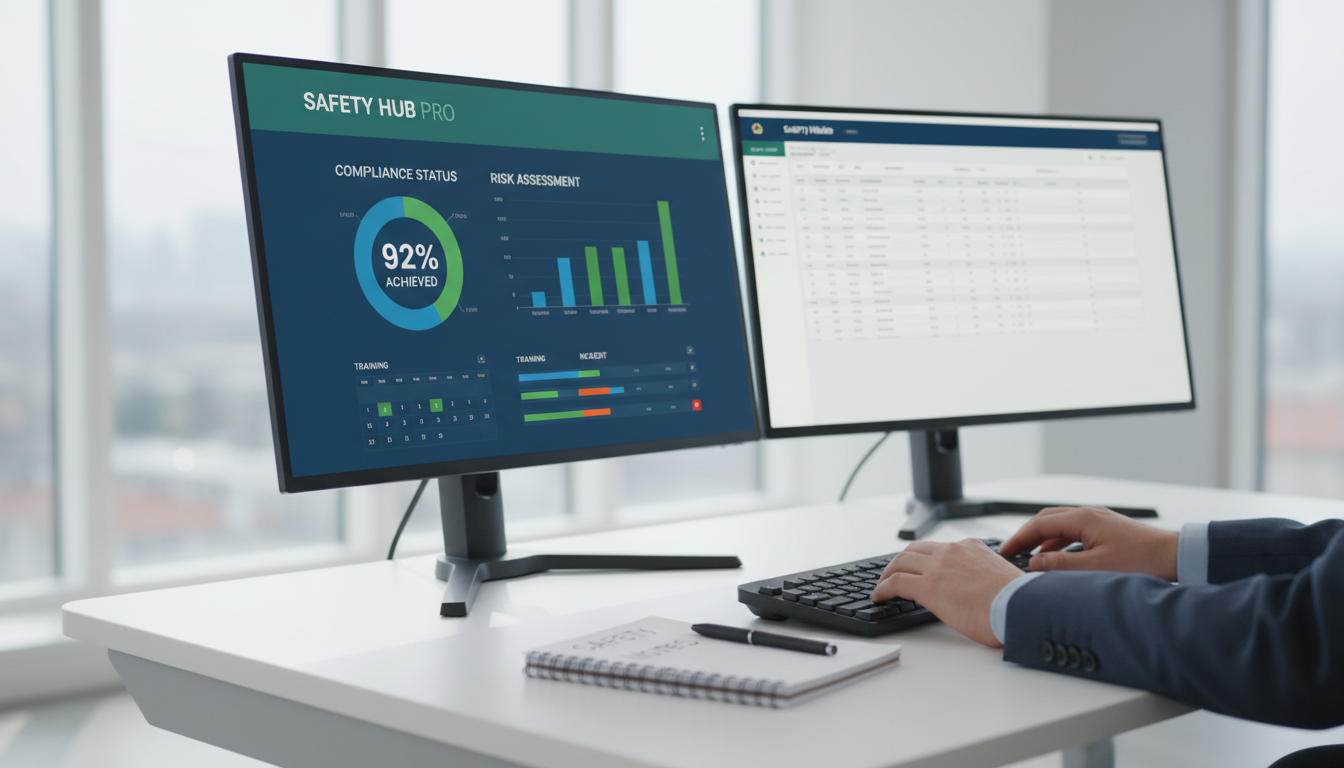
The transition from emergency planning to digital accountability is a hallmark of the 2026 reporting season. For the March 2, 2026, submission deadline, OSHA has expanded the scope of its Injury Tracking Application (ITA). In a significant shift from previous years, high hazard employers with 100 or more employees are now required to submit the detailed data from Forms 300 and 301, in addition to the traditional 300A summary. This means federal regulators will have access to specific incident descriptions and injury types, rather than just aggregated totals.
For many companies, this represents a new level of data transparency. Small businesses that previously only focused on the year end summary must now ensure their daily logs are meticulously maintained throughout the year. Accuracy is paramount, as the data submitted via the ITA becomes part of a searchable public database. To stay ahead of these requirements, employers should follow this practical compliance timeline:
Deadline | Required Action |
|---|---|
January 31, 2026 | Review and certify the 2025 OSHA Form 300A summary |
February 1, 2026 | Post the signed 300A summary in a conspicuous place until April 30 |
March 2, 2026 | Electronically submit Forms 300, 301, and 300A through the ITA portal |
Managing these OSHA changes 2026 small business leaders face requires disciplined record keeping. At SEAI Global, we provide comprehensive OSHA compliance audits to help Brevard County employers verify their injury logs before submission. Because the ITA portal can be technically demanding, we also offer customized OSHA safety training to ensure your administrative staff understands how to classify recordable incidents correctly. Integrating these digital submissions into your standard workplace safety inspections prevents last minute errors that could trigger a targeted enforcement visit.
Federal Heat Illness Prevention Rule: What Florida Employers Need to Know

The shift toward digital transparency in 2026 coincides with a heightened focus on physical environmental hazards, specifically heat stress. On April 10, 2026, OSHA renewed its Heat National Emphasis Program (NEP), which empowers inspectors to conduct proactive visits to worksites when the heat index reaches 80°F. For businesses in Melbourne and throughout Brevard County, this threshold is met frequently. The federal move toward a formalized National Heat Safety Rule means that the long-standing "water, rest, shade" recommendations are transitioning into enforceable mandates.
A core component of these OSHA changes 2026 small business owners must prepare for is the proposed requirement for any employer with more than 10 employees to maintain a written Heat Illness Prevention Plan. This document must detail acclimatization protocols for new hires, specific work-rest schedules during high heat events, and emergency response procedures for heat stroke. It is no longer sufficient to provide a cooler of water; you must document the methodology behind your heat mitigation strategy.
Heat Safety Element | Compliance Requirement |
|---|---|
Access to Water | One quart per employee per hour, kept cool and near work areas |
Shade Access | Mandatory when temperatures exceed 80°F |
Written Plan | Required for 10+ employees; covers acclimatization and rest |
These regulations extend beyond outdoor construction and landscaping. Indoor heat is gaining equal regulatory traction, significantly impacting warehouses, laundries, and commercial kitchens in the local area. SEAI Global provides workplace safety inspections to evaluate thermal stress in these environments. We also help develop compliant written plans and deliver customized OSHA safety training to ensure your supervisors can recognize the early signs of heat exhaustion. These proactive measures are essential to navigating the increased enforcement expected throughout the 2026 summer season.
Additional 2026 Rulemakings: Fixed Ladders and Walking Working Surfaces
While environmental factors like heat take center stage, physical infrastructure remains a core focus of the latest regulatory updates. The 2026 rulemakings continue to refine 29 CFR 1910 Subpart D, specifically regarding fixed ladders and walking-working surfaces. A critical technical shift involves the transition away from ladder cages. For fixed ladders extending more than 24 feet, OSHA is prioritizing ladder safety systems or personal fall arrest systems over traditional cages or wells.
Small businesses in Brevard County often overlook these physical assets during routine maintenance, assuming that a legacy cage provides adequate protection. However, under the evolving standards, cages are no longer considered sufficient fall protection for new or replacement ladders. We incorporate detailed structural reviews into our workplace safety inspections to identify these non-compliant assets before they trigger a penalty. By addressing these physical hazards alongside the other OSHA changes 2026 small business owners must track, you can avoid the high-cost citations associated with fall protection violations. For technical guidance on retrofitting existing structures, a comprehensive OSHA compliance audit provides the roadmap needed for full physical site alignment.
Practical Action Plan: How to Prepare Your Small Business Now
The evolution of physical infrastructure requirements highlights a broader trend: OSHA is moving toward more technical, performance-based standards. For a small business in Melbourne, managing these OSHA changes 2026 small business owners must face requires a systematic approach rather than a reactive one. The cost of non-compliance, including potential five-figure penalties, far outweighs the investment in structured risk management.
To stay ahead of the curve, follow this targeted action plan:
Conduct a chemical inventory audit and update your written HazCom program by November 20, 2026, ensuring all Safety Data Sheets reflect GHS Revision 7 updates.
Verify ITA login credentials and reporting tier by December 31, 2025. If your NAICS code is on the high-hazard list, prepare to digitize your Form 301 incident narratives.
Review emergency response equipment. Audit PPE, such as respirators or specialized gear, against the revised 1910.156 technical specifications to ensure it remains compliant for employee use.
Establish a formal heat stress training module for all crews. This should include specific Florida-based environmental triggers and the mandatory water, rest, and shade intervals.
Effective preparation starts with identifying current vulnerabilities. Scheduling workplace safety inspections or comprehensive OSHA compliance audits now allows you to remediate physical hazards and paperwork gaps long before an inspector arrives. Furthermore, customized OSHA safety training ensures your team can translate these administrative updates into safe daily operations.
Preparing for the 2026 OSHA updates requires proactive planning and a clear understanding of new safety standards. Small businesses that act early can protect their workers while avoiding the stress of last-minute adjustments. If you want expert help navigating these regulatory changes, our team is ready to support your business. Achieving total OSHA Compliance is much easier with professional guidance. Let SEAI Global LLC help you create a safer workplace and ensure your documentation meets every new requirement.