
A workplace accident investigation Florida small business must perform begins with securing the scene and reporting serious injuries to OSHA within strictly mandated timeframes. This process requires identifying root causes to prevent future incidents; it also ensures the company remains compliant with federal and state recordkeeping standards for long-term workplace safety.
For a Florida small business owner, the silence following a workplace injury is often the most stressful moment of the day. Beyond the immediate concern for your employee, a wave of regulatory pressure and potential liability begins to mount. Failing to manage the aftermath correctly can result in hefty OSHA fines, increased workers' compensation premiums, and long-term operational disruptions. This guide provides a clear roadmap to navigate these high-stakes situations with professional precision. You will learn how to manage the critical first hour of an incident, meet specific Florida reporting deadlines, and execute a thorough six-step investigation. We will also explore the five whys technique for root cause analysis and explain how to implement corrective actions that satisfy both safety standards and legal requirements. By following these practical protocols, you can transform a crisis into an opportunity for structural improvement.
Immediate Response: What to Do in the First 60 Minutes After a Workplace Accident
The 60 minutes following an incident are the most critical for a workplace accident investigation that Florida small business owners will ever conduct. In Melbourne, where many employers operate with lean teams, the owner often serves as the primary Safety Officer. This initial window is not just about medical care; it is about establishing control and preserving the integrity of the facts.
First, ensure the employee receives appropriate medical attention. Once the immediate danger has passed, you must secure the scene. Stop all work in the vicinity and use tape or physical barriers to prevent anyone from moving equipment or cleaning the area. This preservation is vital for future accident investigations and the implementation of long-term risk management solutions.
In Florida, small businesses have specific administrative duties that begin almost immediately. You should begin gathering information for the DWC-1 (First Report of Injury or Illness) form. While you have seven days to report most injuries to your insurance carrier, capturing the details while they are fresh is a best practice that prevents discrepancies later. This form is a cornerstone of the Florida workers' compensation system and requires precise data regarding the time, location, and nature of the incident.
Your actions in this hour set the tone for future OSHA compliance audits. If an inspector arrives later, a documented, orderly response demonstrates that you take safety seriously. Avoid the temptation to find fault or blame in these early moments. Focus on the facts: what happened, where it happened, and who was involved. This disciplined approach protects your business from the $16,131 penalties associated with serious violations and ensures a more accurate root cause analysis in the days to follow.
Florida Reporting Requirements: OSHA Deadlines and Workers Compensation Documentation

Once the scene is secure and the injured worker is cared for, the regulatory clock begins to tick. Failing to meet federal and state reporting windows is one of the most common reasons a workplace accident investigation in Florida for small business owners leads to heavy fines. For the 2025 and 2026 period, OSHA mandates that all employers, regardless of size, must report any work-related fatality within 8 hours. Any inpatient hospitalization, amputation, or loss of an eye must be reported within 24 hours. These reports are made directly to OSHA via their 24-hour hotline or online portal.
A common misconception for Melbourne small business owners is that having fewer than 10 employees provides a total exemption from OSHA oversight. While it is true that businesses with 10 or fewer employees are generally exempt from maintaining the OSHA 300 Log of Work-Related Injuries and Illnesses, no business is exempt from the reporting of serious incidents mentioned above. Furthermore, the Florida Department of Financial Services requires the DWC-1 form to be filed with your insurance carrier within seven days of your knowledge of the injury. Delaying these filings can trigger OSHA compliance audits that may result in penalties exceeding $16,131 per serious violation.
It is vital to distinguish between your OSHA 300 log and your internal investigation report. The log is a public record of what happened, whereas your internal investigation report is a private document used for risk management solutions and root cause analysis. To maintain compliance, use the following checklist:
Requirement | Deadline | Applicability |
|---|---|---|
Fatality Reporting | 8 Hours | All Employers |
Hospitalization/Amputation/Eye Loss | 24 Hours | All Employers |
Florida DWC-1 Form | 7 Days | All Employers |
OSHA 300 Log Entry | 7 Days | Employers with 11+ Employees |
OSHA 300A Annual Posting | Feb 1 to April 30 | Employers with 11+ Employees |
Six Essential Steps for a Thorough Workplace Accident Investigation
Understanding the reporting deadlines is only half the battle. To effectively manage risk management solutions, you must execute a systematic process that uncovers the "why" behind an incident. For a workplace accident investigation, Florida small business owners can manage independently by following these six essential steps.
Scene Preservation: Immediately restrict access to the area where the incident occurred. Use cones, caution tape, or even a locked door to ensure no one cleans the area or moves equipment. Small Business Reality Check: In a three-person shop, you cannot afford to shut down the entire facility for a week; however, you must preserve the evidence for at least a few hours to ensure photos capture the exact conditions of the floor or machinery before operations resume.
Information Gathering: Collect physical evidence like broken tools or spilled liquids and take photos from multiple angles. Small Business Reality Check: When interviewing witnesses who are also close friends, conduct the conversation individually in a private space like your office. This reduces the influence of peer pressure and ensures you get an honest account of the events.
Sequence of Events Mapping: Create a chronological timeline leading up to the accident. Start from the beginning of the shift rather than the moment of impact. Small Business Reality Check: Use digital breadcrumbs like badge swipes, timestamped emails, or security footage to verify memories, which can be naturally unreliable during the stress of an accident.
Root Cause Analysis: Move beyond human error to find systemic failures. Use this phase to identify if a lack of training or faulty equipment contributed to the event. This is a core component of professional accident investigations. Small Business Reality Check: It is tempting to blame a "clumsy" employee, but asking why they were rushing often reveals a management or scheduling issue that you have the power to fix.
Corrective Action Planning: Develop a specific plan to prevent recurrence. This might include new signage, updated PPE, or revised safety protocols. Small Business Reality Check: Focus on high-impact changes first if budget is a concern, such as moving heavy inventory to waist height to prevent back strains.
Follow-up: Revisit the site thirty days later to ensure the new protocols are being followed and that the solution is working as intended. Small Business Reality Check: Document this follow-up check; having a paper trail showing you closed the loop is invaluable during future OSHA compliance audits.
Conducting a Root Cause Analysis: Using the 5 Whys Technique in Your Business
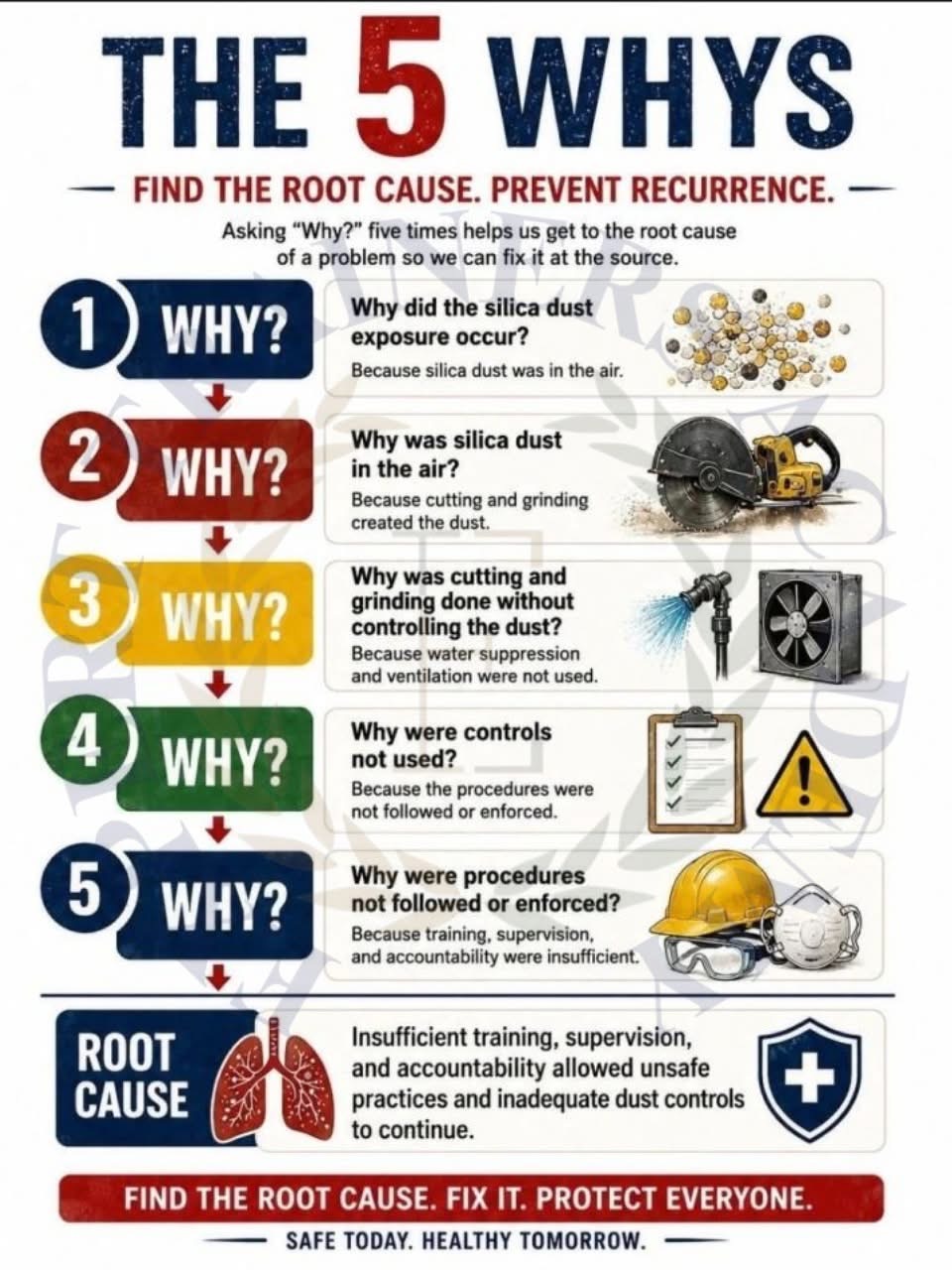
Root Cause Analysis (RCA) is the process of digging past the surface to find the underlying systemic failure. It shifts the focus from blame to prevention by moving away from the question "Who did this?" and toward "Why did the system allow this to happen?" For a workplace accident investigation, Florida small business owners can conduct a successful investigation. The goal is to identify the fundamental reason an incident occurred so it never repeats.
The most practical tool for this is the "5 Whys" technique. Consider a heat-related incident in a Melbourne warehouse. Instead of simply telling the employee to drink more water, you must dig deeper:
Why did the employee suffer heat exhaustion? They were working in a part of the warehouse reaching 98 degrees.
Why was that area so hot? The secondary ventilation fan was non-functional.
Why was the fan non-functional? The motor had burned out due to a clogged filter.
Why was the filter clogged? It had not been inspected or cleaned in over 18 months.
Why was it not cleaned? There was no formal preventative maintenance schedule for HVAC equipment.
In this case, the root cause is not the employee's hydration, but a lack of a maintenance system. Fixing the system provides long-term risk management solutions that a simple lecture cannot. If you find multiple contributing factors, you might use a "Fishbone diagram." This sounds academic, but for a local clinic or shop, it simply means brainstorming causes across categories like Equipment, Environment, and Methods to ensure no stone is left unturned. A thoroughly documented RCA is a core component of professional accident investigations and proves to regulators during OSHA compliance audits that you are proactive about safety.
Gathering Evidence and Interviewing Witnesses Without Creating Conflict
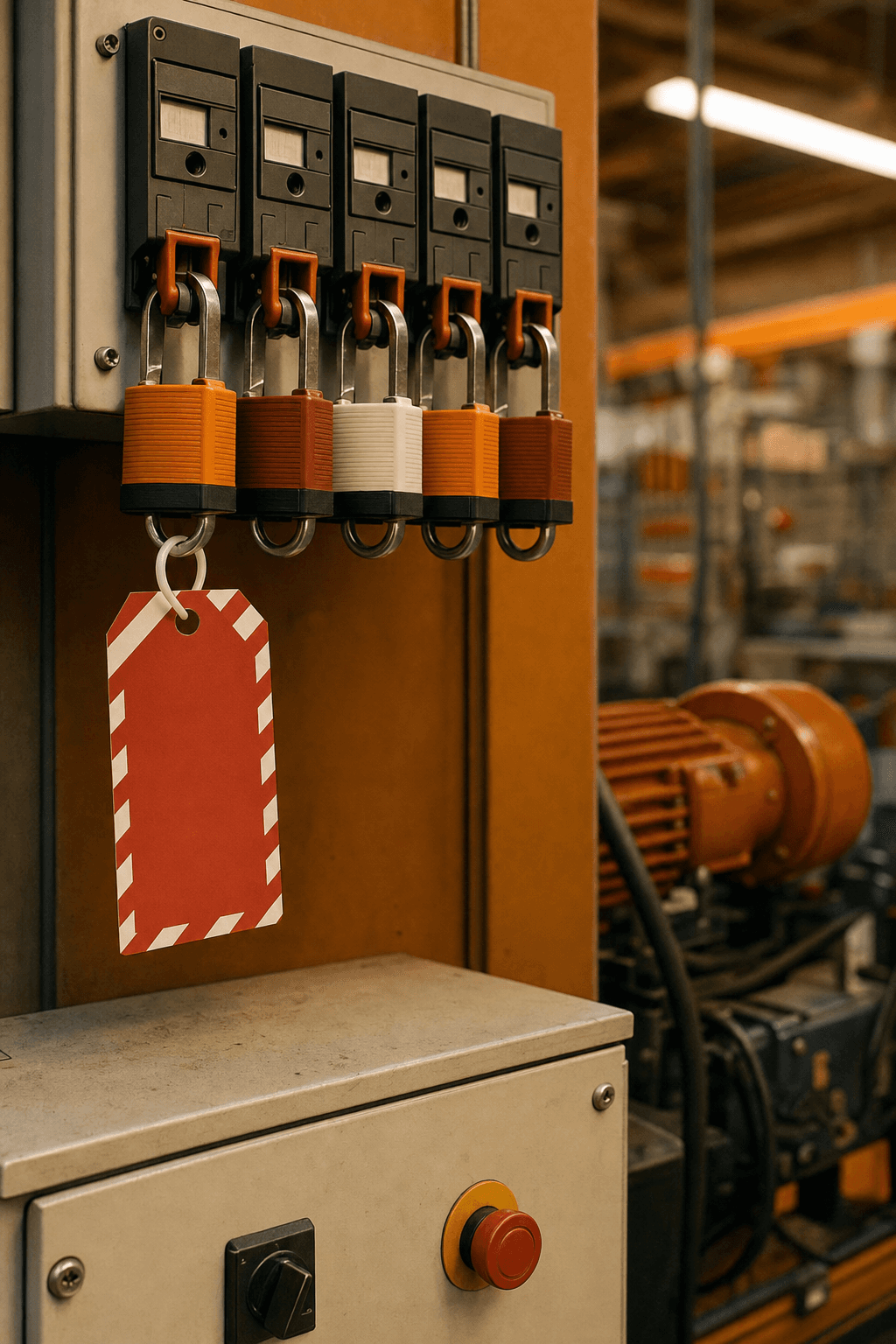
Effective evidence collection requires more than a quick snapshot. When documenting the scene, take photos from three distinct perspectives: wide shots to show the overall environment, medium shots to establish the relationship between objects, and close-ups of the specific hazard. Use a common item like a ruler or a coin to provide scale; ensure lighting is sufficient to capture textures, floor conditions, or fluid spills. For machinery, document the state of all controls, the presence of safety guards, and any recent maintenance tags or lockout devices.
Local owners often ask how long OSHA investigations take. While federal inspectors have up to six months to issue citations, your internal accident investigations should be completed within 48 to 72 hours. This speed ensures details are fresh and allows for the immediate implementation of risk management solutions. A detailed internal report often carries more weight during OSHA compliance audits than a delayed, vague summary.
When interviewing witnesses, prioritize a non-confrontational environment. In the tight-knit culture of many Melbourne businesses, aggressive questioning can destroy morale and lead to filtered accounts. Conduct interviews in a private, neutral space. Start with open-ended prompts like "Walk me through your perspective of the events" to encourage a full narrative. Focusing on "what" happened rather than "who" is at fault ensures the accuracy required for your workplace accident investigation and Florida small business documentation, while reinforcing a culture of transparency and safety.
What Happens After the Investigation: Implementing Corrective Actions and OSHA Prep

Once the root cause is identified, you must translate your findings into a formal Corrective Action Plan. This document should specify the hazard discovered, the exact remedy required, the person responsible for implementation, and a firm completion date. Moving from discovery to action is the most critical phase for long term risk management solutions; it proves that your business is capable of self-correction.
If an inspector arrives at your Melbourne facility, follow a structured protocol. Escort the official to a private room for an opening conference and notify your designated safety lead. You must be prepared to produce your OSHA 300 and 301 logs within four hours of their request. During the walkaround inspection, accompany the officer at all times; take identical photos and notes to ensure your records match theirs.
Should OSHA issue citations, Florida employers have a narrow window of 15 working days to contest the findings or request an informal conference. A professionally documented workplace accident investigation Florida small business owners perform serves as the best defense against "willful violation" claims. These citations can cost up to $161,323 per occurrence. Beyond avoiding fines, showing a history of thorough OSHA compliance audits helps stabilize insurance premiums and protects your reputation in the local community.